How to Fight an Unfair Fault Assignment
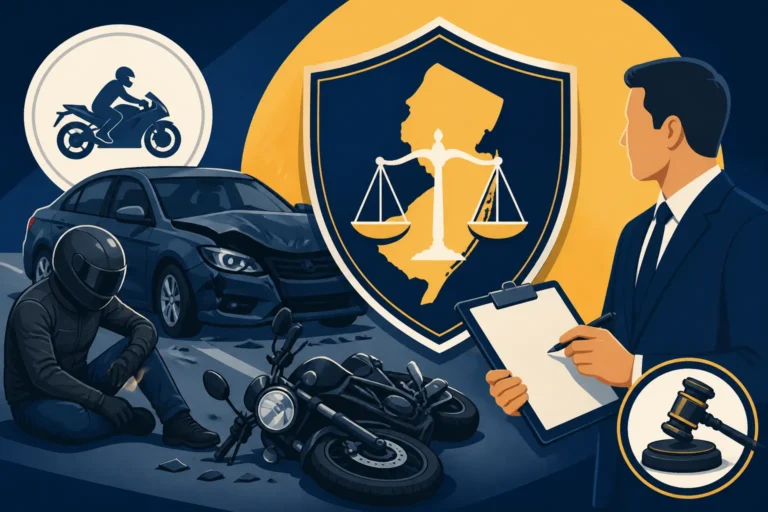
Getting into a motorcycle accident is a nightmare on its own, but what really adds insult to injury is when you find yourself unfairly blamed for a crash that clearly wasn't your fault. It's a frustrating, infuriating experience that far too many riders face, and it can seriously jeopardize your ability to get the compensation you deserve. This guide is here to walk you through exactly how to fight back and challenge an unfair fault assignment, empowering you with the knowledge to protect your rights and your claim.
Understanding Unfair Fault Assignments
It's a tough pill to swallow, but motorcyclists often start at a disadvantage when it comes to fault in an accident. There's a persistent, often subconscious, bias against us, and it can impact everything from the initial police report to how insurance companies perceive the incident.
The Immediate Aftermath and Blame Game
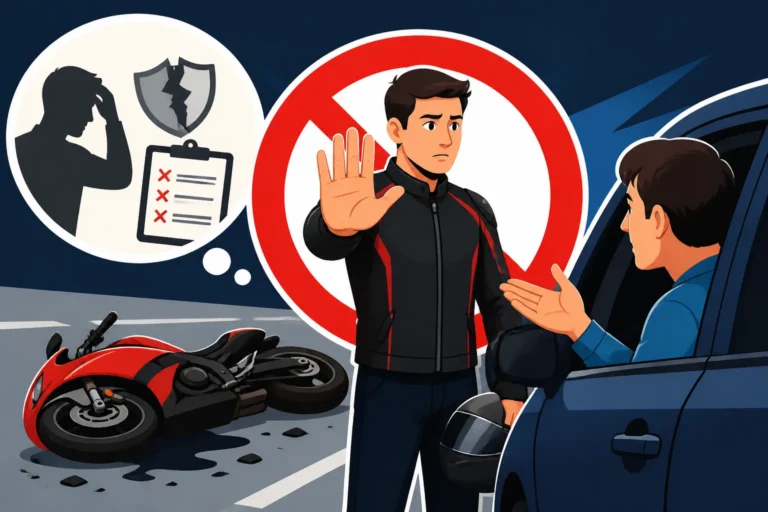
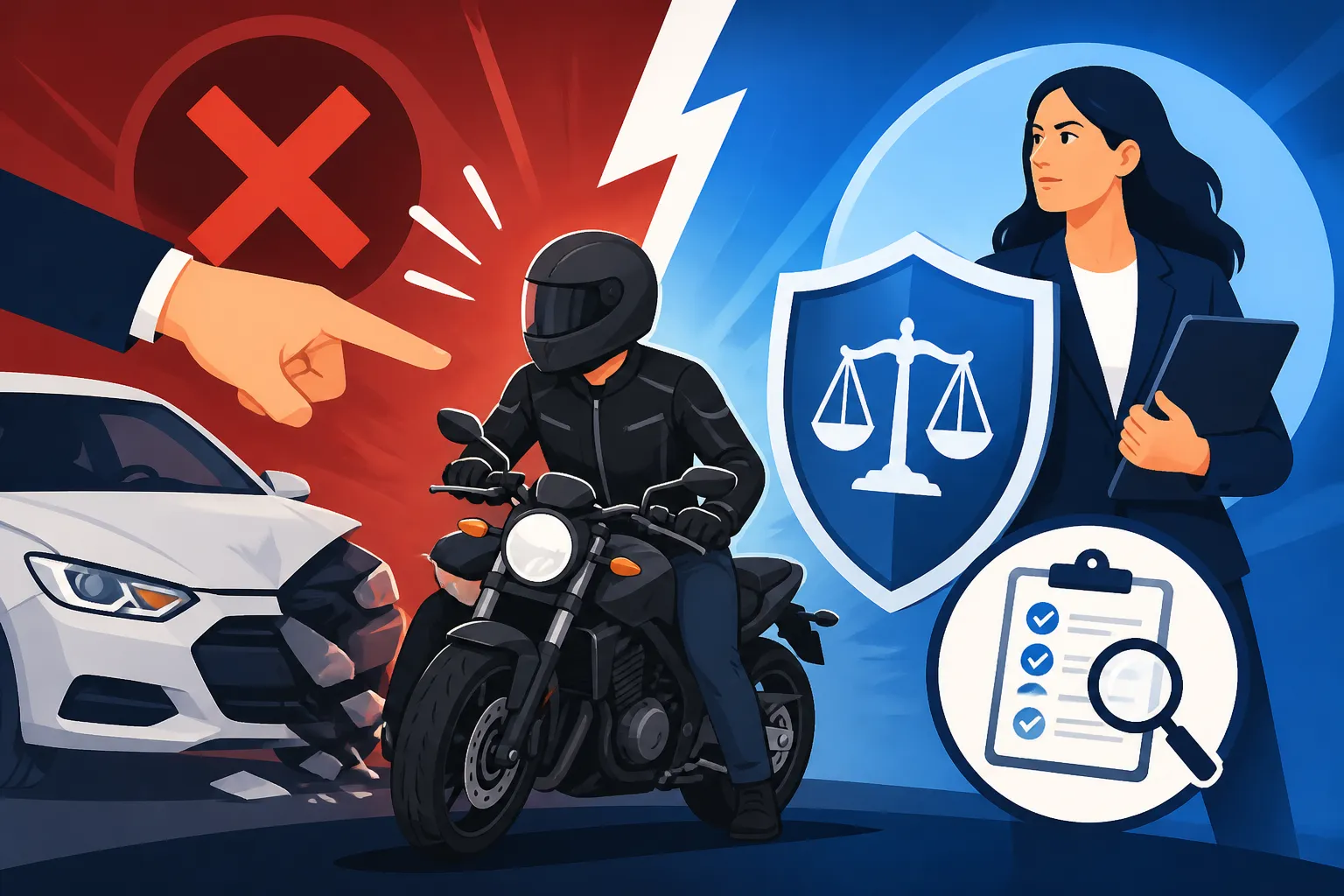
Imagine this: you've just been involved in a collision, adrenaline is pumping, you might be injured, and then the police arrive. Before you even have a chance to fully process what happened, you might hear the other driver utter the infamous line, "I didn't even see them!" or perhaps even witness them pointing the finger directly at you. This immediate aftermath is chaotic, and snap judgments can be made that stick, often unfairly.
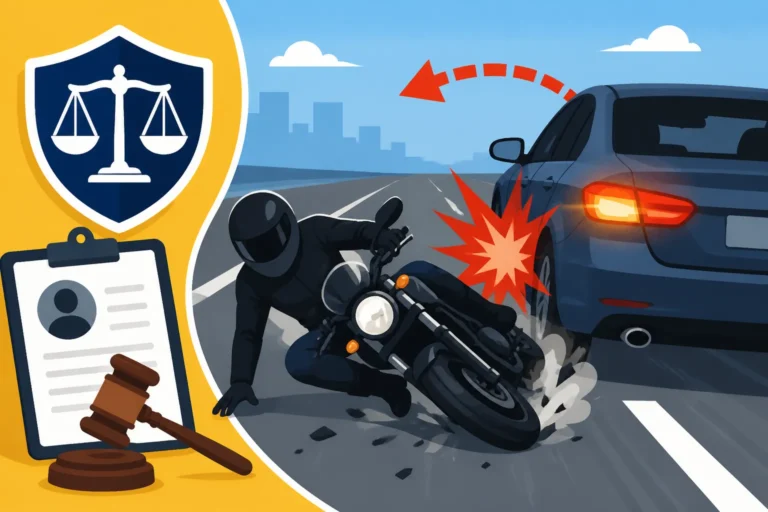
Emergency responders, witnesses, and even the involved parties are trying to piece together a story, and sometimes, the narrative that emerges isn't accurate. Drivers of larger vehicles might genuinely miss a motorcycle due to various factors like blind spots or simple inattention, yet they might subconsciously (or even consciously) shift blame to avoid responsibility. This initial assignment of fault, whether by a police officer at the scene or implied by the other driver, sets a dangerous precedent for your entire claim. It's not just about who feels responsible; it's about establishing legal liability, and an unfair assessment at the outset can make your recovery journey significantly harder. This is why understanding Who Is at Fault in a Motorcycle Accident is so crucial from the very beginning.
Why Riders Face a Bias
Let's be real, there's a cultural stereotype out there that paints motorcyclists as reckless thrill-seekers, inherently more dangerous and therefore, more prone to causing accidents. This perception, whether it's fair or not, can sadly influence how law enforcement, insurance adjusters, and even juries view a motorcycle accident. It’s a phenomenon known as Rider Bias in Fault Determination, and it's something you need to be acutely aware of.
For instance, a car driver might cut you off, but because you swerved to avoid a direct hit and ended up with a less severe collision, an uninformed observer might mistakenly think your evasive maneuver was the cause. Or, if you were riding a custom bike or had visible tattoos, some people might automatically assume you were speeding or driving aggressively, even if evidence proves otherwise. This bias means that sometimes, even when the facts point clearly to the other driver's negligence, you might find yourself fighting an uphill battle to prove your innocence. It's frustrating and unfair, but being prepared for it is the first step in overcoming it.
Gathering and Preserving Crucial Evidence
The single most powerful tool you have against an unfair fault assignment is solid, undeniable evidence. The moments immediately following an accident are critical for collecting this evidence, and what you do (or don't do) can significantly impact your ability to challenge an unjust blame.
Documenting the Accident Scene
Think of your accident scene as a puzzle, and every piece of evidence you collect helps paint the clearest picture of what actually happened. After ensuring everyone's immediate safety and calling for help, your phone becomes your most important investigative tool. Start snapping pictures and taking videos from every conceivable angle. This isn't just about documenting damage; it's about capturing the broader context.
- Vehicle Positions: Get shots of where your motorcycle and the other vehicle ended up. Was the other car straddling the lane line? Was your bike clearly within its lane?
- Road Conditions: Photograph skid marks, debris, potholes, traffic signs, and signals. Were there any obstructions that limited visibility for the other driver? Was the road wet or poorly maintained? This can even tie into [Road Hazards Motorcycle Accident Liability].
- Surrounding Area: Take wide shots that show the intersection, nearby businesses, traffic cameras, and anything that provides geographical context. A broader view can sometimes reveal a crucial detail.
- Damage Details: Focus on specific damage to both vehicles. The type and location of damage can often tell an accident reconstruction expert a lot about the angle and force of impact, which helps prove How Fault Is Determined in Motorcycle Accidents.
- Injuries: If possible, discreetly photograph your visible injuries at the scene. This establishes an immediate link between the crash and your physical harm.
It's astonishing how quickly an accident scene can change. Vehicles get moved, debris gets cleared, and soon, all those crucial visual details are gone. That's why being proactive in documenting is paramount. For a full breakdown, check out How to Document the Scene to Prove Fault.
Medical Records and Injury Documentation
When an insurance company tries to assign you fault, they're often looking for ways to minimize their payout, and that includes questioning the severity—or even existence—of your injuries. Thorough medical documentation isn't just for your health; it's an essential part of proving your damages and thus, indirectly, strengthening your claim against unfair fault.
From the moment you seek medical attention, every doctor's visit, every diagnosis, every prescription, and every therapy session creates a paper trail. This trail directly links your physical harm to the accident. If you delay seeking treatment, or if your medical records are sparse, the opposing side might argue that your injuries weren't serious enough to warrant immediate care, or worse, that they're not related to the accident at all. They might even try to claim a pre-existing condition is the real culprit.
Keeping a detailed record of your physical recovery, your pain levels, and how your injuries impact your daily life (like missing work or being unable to participate in hobbies) provides undeniable evidence. A personal injury journal can be incredibly helpful here, detailing your struggles and progress. Remember, the more comprehensive your medical evidence, the harder it is for anyone to dispute the real impact this accident has had on your life, which ultimately strengthens your entire claim.
Traffic Laws and Police Reports
The police report is often the first "official" document related to your accident, and it carries significant weight with insurance companies. A police officer's determination of fault can heavily influence an adjuster's initial assessment of your claim. However, it's crucial to understand that police officers are not always accident reconstruction experts, and their reports can sometimes contain errors or incomplete information, especially if they didn't witness the crash themselves.
Therefore, you need to understand How Police Reports Establish Fault and scrutinize every detail of the report. Look for:
- Discrepancies: Does the report align with your memory or the physical evidence you collected? Are there any factual errors regarding the location, time, or vehicles involved?
- Witness Information: Did the officer speak to all available witnesses? Is their contact information correctly listed?
- Diagram Accuracy: Does the accident diagram accurately depict the vehicle positions and movements?
- Traffic Citations: While a citation against the other driver can be helpful, a citation against you doesn't automatically mean you're at fault for the accident, though it can complicate matters.
If you find inaccuracies, you have the right to request a correction. This isn't always easy, but it's a vital step. You can provide additional evidence, witness statements, or even dashcam footage to the investigating agency. Learning How to Correct a Wrong Police Report can save your claim from an unfair initial assessment. A corrected report, or even documentation that you attempted to correct it, can significantly bolster your position when negotiating with insurance companies.
Strategies to Challenge Fault Determination
Once you've gathered your evidence, the real work begins: actively challenging any unfair fault assignment. This often involves systematically dismantling the opposing side's arguments and presenting a compelling case for your innocence.
Challenging the Other Driver's Narrative
One of the most common refrains heard after a motorcycle accident is, "I didn't see the motorcycle!" This phrase, while potentially true in the sense that the driver wasn't paying attention, is not an excuse and certainly doesn't absolve them of fault. In fact, it often highlights their negligence. This is why it's so important to understand 'I Didn't See the Motorcycle' Defense Explained and how to counter it.
To challenge this narrative effectively, you need to focus on proving that the other driver should have seen you. This can involve:
- Visibility: Was it broad daylight? Were your headlights on (as required in many states)? Was your lane position appropriate? Evidence of high-visibility gear or a well-lit motorcycle can counter this defense.
- Line of Sight: Use photos and diagrams to demonstrate that there were no obstructions blocking their view of your approach. If they claim a tree blocked their view, but your photos show a clear line of sight, their defense crumbles.
- Duty of Care: All drivers have a legal obligation to operate their vehicles safely and be aware of their surroundings. Their failure to see you, when you were clearly visible, indicates a breach of this duty, demonstrating negligence.
- Driver Behavior: Was the other driver distracted? Were they on their phone, eating, or otherwise not focused on the road? While harder to prove without direct evidence, consistent patterns of behavior can sometimes be inferred.
This is where the detailed evidence you collected at the scene becomes invaluable. Every photograph, every witness statement, and every detail about your motorcycle's visibility contributes to a stronger counter-narrative.
The Role of Accident Reconstruction Experts
Sometimes, the intricacies of a crash scene are too complex for the average person—or even an insurance adjuster—to fully understand. This is where an accident reconstruction expert becomes an indispensable asset. These professionals use scientific principles, physics, and advanced technology to recreate the accident sequence, often providing irrefutable evidence of what truly happened. For more details, look into How Accident Reconstruction Determines Fault.
What exactly do they do?
- Data Analysis: They examine everything from vehicle damage, skid marks, debris fields, and roadway dimensions to traffic camera footage and black box data from vehicles (if available).
- Calculations: Using formulas related to speed, force, and trajectory, they can determine impact points, vehicle speeds at impact, and the sequence of events leading up to and during the collision.
- Visualizations: They often create detailed diagrams, 3D models, or animations that clearly illustrate their findings, making complex information understandable to adjusters, lawyers, and juries.
Imagine a situation where the other driver claims you were speeding, but the expert's analysis of skid marks and vehicle deformation proves you were within the speed limit. Or perhaps they allege you swerved unnecessarily, but reconstruction shows your evasive maneuver was the only way to avoid a more catastrophic impact. An expert's objective analysis can demolish biased or inaccurate claims of fault, providing a credible, scientific foundation for your case. This level of expert testimony can be the turning point in overturning an unfair fault assignment.
Leveraging Witness Testimony and Dashcam Footage
In the he-said, she-said world of accident claims, independent corroboration is pure gold. This comes in two primary forms: witness testimony and technological evidence like dashcam footage.
- Witness Testimony: People who saw the accident but aren't involved in it are considered objective. Their accounts can confirm your version of events, contradict the other driver's story, or simply fill in crucial gaps. Even a brief statement from someone who saw the other driver distracted, speeding, or violating a traffic law can be incredibly powerful. That's why collecting their contact information at the scene is so vital. Remember, How Witnesses Affect Motorcycle Fault can significantly sway an investigation.
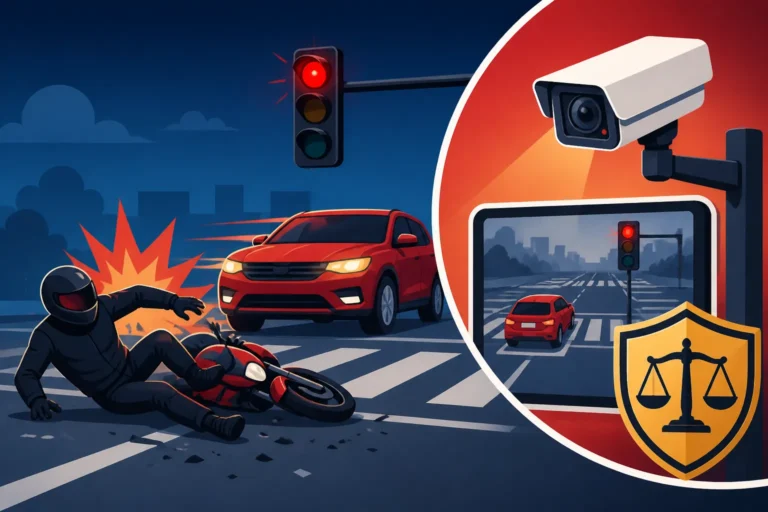
- Dashcam/Surveillance Footage: This is often the ultimate "smoking gun." Video footage from your own dashcam, a nearby business's security camera, or even a Ring doorbell can provide an undeniable, objective record of the accident. It removes all doubt about vehicle movements, traffic signal status, and driver behavior. If the footage clearly shows the other driver running a red light or making an illegal turn, it's very difficult for them or their insurance company to deny fault. In today's world, where so many vehicles have dashcams and businesses have surveillance, actively seeking out such footage can be a game-changer. It's often the best way to leverage How Dashcam Footage Proves Fault.
Even seemingly minor details from a witness or a short video clip can dramatically shift the balance of evidence in your favor, effectively debunking any unfair fault claims against you.
Navigating Insurance Companies and Legal Pathways
Once you have your evidence, the next step is to use it effectively against the entities that hold the purse strings: the insurance companies. This is where strategic communication and, often, legal expertise become absolutely paramount.
Dealing with Insurance Adjusters
Insurance adjusters are professionals, and their job is to protect their company's bottom line. This means they are often trained to find reasons to deny or minimize claims, including shifting fault to the motorcyclist. It's not personal, it's business, but it can feel incredibly personal when you're the one injured and being unfairly blamed. You need to understand How Insurance Companies Assign Blame to Riders.
Here’s what you need to know:
- Be Polite, Not Overly Friendly: Keep your interactions factual and professional. Avoid casual conversation that could be misconstrued.
- Never Admit Fault: Even a seemingly innocent "I'm so sorry that happened" can be twisted into an admission of guilt. Stick to the facts.
- Limit Information: You are generally required to provide your basic contact and insurance information. Beyond that, be cautious about providing detailed statements about the accident without first consulting with an attorney. You are not obligated to give a recorded statement to the other driver's insurance company.
- Document Everything: Keep a log of all communications, including dates, times, names, and a summary of what was discussed.
- Present Your Evidence: Once you've compiled a strong evidence package, present it clearly and concisely. Highlight discrepancies in their fault assessment based on your proof.
Insurance adjusters often start with an initial assessment that places some, or even all, of the blame on the motorcyclist, largely due to the biases we discussed earlier. Your job, with or without legal counsel, is to systematically dismantle their assumptions with concrete evidence.
When Shared Fault Comes into Play
Even with compelling evidence, there might be situations where you are assigned some percentage of fault. This isn't always fair, but it's a reality of many states' legal systems, particularly those that operate under comparative negligence laws. Comparative Negligence in Motorcycle Accidents means that if you are found partially at fault, your compensation can be reduced by your percentage of fault.
States like California follow "pure comparative negligence," meaning you can recover damages even if you're 99% at fault, though your payout would be reduced significantly. Other states, like Texas or Ohio, follow "modified comparative negligence" (often a 51% rule or 50% rule), where if you're found to be 51% (or 50% in some states) or more at fault, you might not be able to recover any damages.
This is why fighting for every percentage point of fault is so critical. If an insurer tries to assign you 20% fault when you believe it's 0%, that 20% reduction directly impacts your potential settlement for medical bills, lost wages, and pain and suffering. If they unfairly push your fault past a certain threshold (e.g., 51%), it could mean the difference between recovering substantial damages and recovering nothing at all. Understanding the specific comparative negligence laws in your state is essential, as is vigorously challenging any unfair assignment of Shared Fault in Motorcycle Accidents.
The Critical Role of a Motorcycle Accident Lawyer
Let's be blunt: fighting an unfair fault assignment, especially against a large insurance company, is incredibly challenging to do on your own. This is precisely why engaging a knowledgeable motorcycle accident lawyer is not just helpful, but often essential. For many riders, the question isn't if they need legal help, but Do You Need a Motorcycle Accident Lawyer?
A skilled lawyer brings a wealth of expertise and resources to your fight:
- Legal Knowledge: They understand the nuances of traffic laws, accident liability, and comparative negligence rules in your specific state. They know how to interpret police reports, identify legal precedents, and build a strong case.
- Investigation: Lawyers can go beyond what you might be able to do. They can subpoena records, access traffic camera footage that isn't publicly available, depose witnesses, and call upon accident reconstruction experts or medical professionals to provide testimony.
- Negotiation Skills: They are seasoned negotiators who understand the tactics insurance companies use. They won't be intimidated by lowball offers or attempts to shift blame, and they know how to present your case in the most favorable light to maximize your settlement.
- Protection from Adjusters: Your lawyer becomes your shield. They handle all communication with the insurance companies, preventing you from accidentally saying something that could harm your claim and ensuring your rights are protected.
- Court Representation: If negotiations fail, a lawyer can take your case to court, advocating fiercely on your behalf. They understand courtroom procedures, how to present evidence to a jury, and how to effectively cross-examine opposing witnesses.
In essence, a lawyer levels the playing field, ensuring that your voice is heard and your evidence is properly presented. They transform your struggle against an unfair fault assignment into a professional, strategic battle where your chances of success are significantly enhanced.
Here's a quick look at common evidence types and how they combat unfair fault assignments:
| Evidence Type | How It Helps Combat Unfair Fault | Example Scenario |
|---|---|---|
| Photos/Videos | Documents scene conditions, vehicle positions, road hazards, damage. | Other driver claims you were in their blind spot; photos show your bike clearly in the lane of traffic with high-visibility gear right before impact. |
| Witness Statements | Provides objective, third-party accounts of the accident. | Other driver says they had a green light; witness statement confirms the other driver ran a red light. |
| Police Report | Official record, but needs verification; can be corrected. | Report initially blames you for speeding; a corrected report, based on new evidence, shifts blame to the other driver for failing to yield. |
| Medical Records | Establishes injury severity and link to the accident. | Opposing insurer claims your injuries are minor; detailed records show extensive treatment for serious spinal injuries directly linked to the crash's force. |
| Accident Reconstruction | Scientific analysis of crash dynamics, speed, and impact points. | Other driver alleges you braked suddenly; expert analysis of skid marks and vehicle data proves their excessive speed was the primary factor in the rear-end collision. |
| Dashcam Footage | Irrefutable visual evidence of the accident sequence. | Driver claims you swerved erratically; dashcam footage clearly shows them drifting into your lane, forcing your evasive action. |
| Traffic Laws | Establishes legal duties and violations. | Other driver states they didn't see you making a left turn; your attorney highlights the state law requiring drivers to yield to oncoming traffic when making a left turn, placing clear liability on them. |
Disclaimer
Please remember that this information is for educational purposes only and is not a substitute for professional legal advice. Every motorcycle accident claim is unique, and the laws governing personal injury claims vary by state. It is always recommended to consult with a qualified motorcycle accident attorney to discuss the specific details of your case and understand your legal rights and options.