How Comparative Negligence Affects Settlements in Tennessee
Getting into a motorcycle accident is jarring enough, but then you're faced with the daunting process of trying to recover for your injuries and damages. A big question that often comes up, especially when you're not entirely sure who was at fault, is how any shared responsibility might impact your ability to get a fair settlement. This guide is all about shedding light on how comparative negligence laws specifically in Tennessee can affect your motorcycle accident claim and what you need to know to protect your rights.
Understanding Comparative Negligence in Tennessee
It's a tough pill to swallow, but sometimes, even when another driver is clearly mostly to blame, you might find yourself assigned a percentage of fault for a motorcycle accident. This concept is known as comparative negligence, and it's absolutely critical to understand how it works, especially if you're riding in the Volunteer State. You see, every state handles shared fault a little differently, and Tennessee has its own specific rules that can make or break your ability to recover compensation.
What is Modified Comparative Negligence?
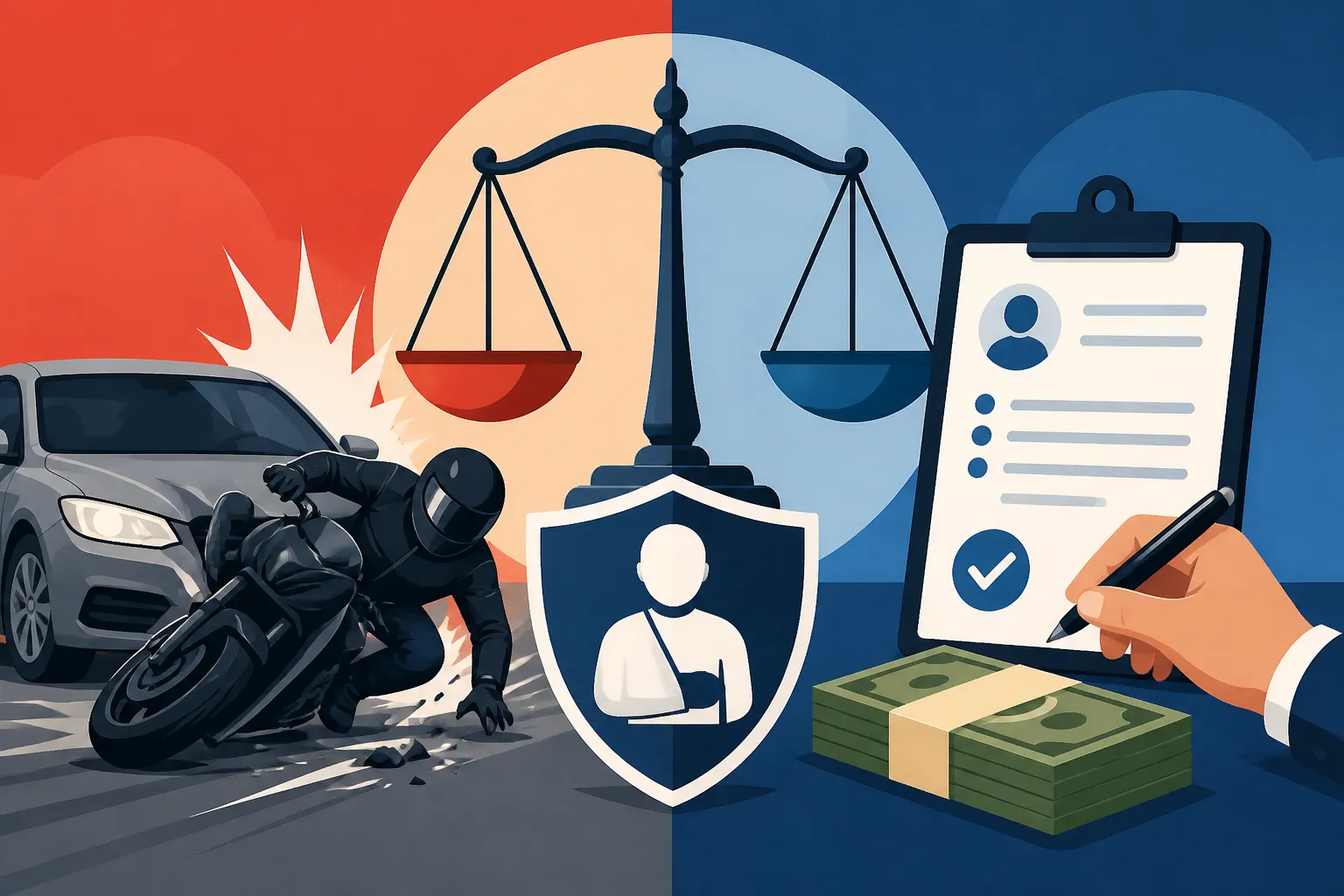
In plain terms, comparative negligence is a legal principle that allows an injured party to recover damages even if they were partly at fault for the accident. However, Tennessee doesn't operate under a "pure" comparative negligence system, where you can recover no matter how much fault you carry. Instead, Tennessee follows what's known as modified comparative negligence with a 50% bar. This means there's a specific threshold you can't cross.
Think of it this way: if you're involved in a motorcycle accident and it's determined that you were, say, 25% at fault for the crash, you can still recover damages from the other driver. However, your total compensation will be reduced by your percentage of fault. So, if your total damages were $100,000, and you were 25% at fault, you would only be able to recover $75,000. It's a system designed to ensure that those who bear some responsibility for a crash also bear some of the financial consequences. This is a common way that states handle Shared Fault in Motorcycle Accidents.
The "50% bar" is the crucial part. This rule states that if your assigned fault percentage is equal to or greater than 50%, you are completely barred from recovering any compensation from the other party. This means that if you're found to be 50% at fault, you get nothing. If you're 51% at fault, you get nothing. It's an all-or-nothing situation once you hit that halfway mark, and insurance companies know this all too well.
How the 50% Rule Works for Riders
For us riders, this 50% rule is absolutely vital. Imagine you're cruising down I-40 near Nashville, and a car suddenly makes an illegal lane change, causing you to lay down your bike. The car driver is clearly mostly at fault. But perhaps it's argued that you were slightly speeding, or maybe your headlight wasn't as bright as it should have been. The insurance adjuster for the other driver will immediately try to pin as much fault on you as possible, aiming to get your percentage to that 50% mark or higher.
Let's break down some scenarios to make it clearer:
- Scenario 1: You are 20% at fault. Let's say your total damages (medical bills, lost wages, pain and suffering, bike repairs) are determined to be $50,000. Because you are 20% at fault, your recoverable damages would be reduced by 20%. So, $50,000 – (20% of $50,000) = $50,000 – $10,000 = $40,000. You would receive $40,000.
- Scenario 2: You are 49% at fault. In this case, with $50,000 in damages, you'd recover $50,000 – (49% of $50,000) = $50,000 – $24,500 = $25,500. While significantly reduced, you still get something.
- Scenario 3: You are 50% at fault. This is where the hammer drops. If the jury or settlement negotiators determine you are exactly 50% at fault for the accident, you recover nothing. Zero. The other driver's insurance company pays you nothing, even if they were equally at fault.
- Scenario 4: You are 51% or more at fault. Even worse than Scenario 3, if your fault is assessed at 51% or higher, the same outcome applies: you recover nothing. This is why disputing fault and having solid evidence is so critical when dealing with motorcycle accident claims in Tennessee.
Understanding this strict threshold is paramount because it informs every negotiation and legal strategy in your accident claim. It means you absolutely need to be prepared to fight against any unfair attribution of fault. You might be surprised to learn How Insurance Companies Assign Blame to Riders and how often they try to place more fault on motorcyclists.
Factors Influencing Fault Assessment in Tennessee
Determining who is at fault in a motorcycle accident is rarely straightforward. There are so many variables at play, from traffic laws to road conditions, and each can contribute to how fault is ultimately apportioned. In Tennessee, a thorough investigation is always necessary, and every piece of information matters when it comes to assigning percentages of fault. This is especially true given the state's modified comparative negligence rule.
Evidence Collection and Its Role
The strength of your claim hinges almost entirely on the evidence you can provide. Without clear, compelling evidence, it becomes your word against theirs, and that's a battle that riders often lose due to inherent biases. The types of evidence gathered right after the crash can significantly influence how fault is determined and, by extension, how much compensation you might receive. For more detail, you should explore Motorcycle Accident Evidence for Proving Fault.
Here’s a breakdown of crucial evidence:
- Police Reports: The accident report filed by the responding police officer is often the first piece of evidence an insurance company or court will look at. It documents key facts like the time and location, weather conditions, vehicle positions, and witness statements. While not definitive proof of fault, it often indicates whether any traffic citations were issued, which can strongly suggest fault. However, remember that police reports can sometimes contain errors or assumptions, and it's possible to How to Correct a Wrong Police Report if it's inaccurate.
- Witness Statements: Independent witnesses can be incredibly powerful. Someone who saw the accident unfold from a neutral perspective can corroborate your account and contradict the other driver's version of events. In Tennessee, a good witness can make all the difference in chipping away at any fault the insurance company tries to place on you. How Witnesses Affect Motorcycle Fault cannot be overstated.
- Photographs and Videos: Pictures taken at the scene – of vehicle damage, road conditions, skid marks, traffic signals, and your injuries – are invaluable. They offer a visual, undeniable record of what happened. Dashcam footage or even surveillance video from nearby businesses can be game-changers, offering irrefutable proof of who did what. For example, if a car made a sudden left turn in front of you, dashcam footage can prove this, directly countering any claim that you were speeding or inattentive.
- Accident Reconstruction: In complex or serious cases, accident reconstruction experts can recreate the crash using scientific principles and physical evidence. They can analyze vehicle speeds, impact angles, and driver actions to provide an expert opinion on the sequence of events and who was at fault. This can be especially important when the other party tries to claim you were primarily at fault, pushing your percentage over that critical 50% mark.
- Medical Records: While medical records don't prove fault, they are essential for documenting the extent and severity of your injuries, which ties directly into the value of your damages. The sooner you seek treatment after a crash, the harder it is for insurance companies to argue that your injuries weren't caused by the accident, which can be another tactic they use to reduce payouts.
Common Scenarios Leading to Shared Fault
Even when another driver seems entirely to blame, there are several common scenarios where a motorcycle rider might be assigned a percentage of fault in Tennessee. It's often not about one party being 100% guilty, but a combination of factors.
Here are a few examples:
- Speeding or Reckless Driving: If you were exceeding the posted speed limit, even slightly, at the time of the collision, the other driver's insurance company will absolutely seize on that. They'll argue that if you hadn't been speeding, you might have had more time to react or the accident might have been less severe. Even if a car pulled out in front of you, your speed could still contribute to the severity or inevitability of the crash. This is why How Speeding Affects Motorcycle Accident Fault is a critical read.
- Unsafe Lane Changes or Following Too Closely: Just like cars, motorcyclists have a responsibility to signal lane changes properly and maintain a safe following distance. If you were making an unsafe lane change or tailgating another vehicle that suddenly stopped, you could be assigned partial fault. Even in cases where a car makes an unsafe lane change, your position relative to that vehicle might be scrutinized.
- Failure to See the Other Vehicle: While it's a frustratingly common refrain for drivers to say "I didn't see the motorcycle," it's also true that riders have a duty to be visible and attentive. If it can be argued that you weren't using your headlights (even during the day, which is required in Tennessee for motorcycles), or you were in a vehicle's blind spot for an extended period, an insurance company might attempt to assign some fault to you. This is less about specific state law and more about the general duty of care. For example, if you were riding through an intersection, and the other driver claimed they didn't see you, while frustrating, the argument might shift to whether you could have taken evasive action had you been more attentive. This is often part of the "I Didn't See the Motorcycle' Defense Explained".
- Improper Equipment or Maintenance: If your motorcycle had a faulty brake light, turn signal, or worn tires, and these issues contributed to the accident, you could be found partially at fault. Riders have a responsibility to keep their bikes in safe operating condition.
- Lane Splitting: While Tennessee does not permit lane splitting, if you were engaged in it when an accident occurred, you would almost certainly be found largely, if not entirely, at fault. Many states treat lane splitting as a serious traffic violation that directly impacts liability. Be sure to check Lane Splitting Legality and Fault by State if you travel.
Each of these scenarios highlights the importance of not just riding safely, but also being aware of how your actions, even minor ones, can be used to assign fault and reduce your settlement under Tennessee's comparative negligence laws.
Impact on Your Motorcycle Accident Settlement
When you're dealing with the aftermath of a motorcycle accident, understanding how comparative negligence directly influences your potential settlement is paramount. It’s not just an abstract legal concept; it has real, tangible financial consequences for you and your recovery. In Tennessee, that 50% threshold is a brick wall that can completely prevent you from receiving any compensation at all, making every percentage point of fault a battleground.
Reductions in Compensation
The most immediate and obvious impact of comparative negligence is the reduction in the total compensation you can receive. Once a percentage of fault is assigned to you, that percentage is simply subtracted from your total calculated damages. This applies across the board to all types of damages you might be seeking, including:
- Medical Expenses: Everything from emergency room visits, surgeries, medications, physical therapy, and future medical care can be reduced. If your total medical bills are $30,000, and you're found 30% at fault, you'd only recover $21,000 for those bills.
- Lost Wages: If your injuries kept you from working, your lost income will also be reduced by your fault percentage. If you lost $10,000 in wages and were 30% at fault, you'd only get $7,000.
- Pain and Suffering: These non-economic damages, which account for your physical pain, emotional distress, and loss of enjoyment of life, are often a significant portion of a motorcycle accident settlement. These too will be proportionately reduced. If a jury awards you $50,000 for pain and suffering, but you're 30% at fault, that award shrinks to $35,000.
- Property Damage: The cost to repair or replace your motorcycle, helmet, and other damaged gear will also see the same percentage reduction.
It’s easy to see how quickly even a small percentage of fault can eat into your much-needed compensation. The insurance company for the at-fault driver is acutely aware of this, and their adjusters will often try to inflate your fault percentage to minimize their payout. This is why it’s so important to have a clear understanding of How Comparative Negligence Reduces Your Payout.
For instance, consider a serious collision on a busy road in Knoxville. You sustained significant injuries, racking up $75,000 in medical bills and losing $15,000 in wages. Your pain and suffering are valued at $100,000, and your bike is a total loss, valued at $10,000. Your total damages come to $200,000. If an investigation determines you were 25% at fault for some minor infraction, your total recoverable damages would drop by $50,000, leaving you with $150,000. While still substantial, that's a quarter of your damages gone due to shared fault.
The "All or Nothing" Cliff Edge
Beyond the simple reduction, the most terrifying aspect of Tennessee's modified comparative negligence rule is the "all or nothing" cliff edge at the 50% mark. As mentioned earlier, if you are found to be 50% or more at fault for the accident, you receive no compensation. This is not a reduction; it’s a complete bar to recovery.
Imagine the frustration and devastation of being severely injured, facing hundreds of thousands in medical bills, only to be told you get nothing because a jury or an insurance adjuster decided you were 50% at fault. This isn't theoretical; it happens. Insurance companies are skilled at pointing out any perceived fault on the rider's part, sometimes exaggerating it, to try and push them over this critical threshold. They understand that if they can successfully argue you were 50% responsible, they pay nothing.
For example, you might have been hit by a driver who ran a red light in Chattanooga, a clear case of negligence. But if the insurance company can convince a jury that you were also speeding and that your speed contributed equally to the collision's severity or your inability to avoid it, you could be found 50% at fault. Game over. You bear the entire financial burden of your injuries and property damage. This rule makes fighting for every percentage point of fault absolutely essential in Tennessee, making How the 50% Fault Rule Works an important topic for understanding this critical aspect of state law.
This underscores the aggressive tactics insurance companies often employ. They know that pinning 50% or more of the blame on you means they walk away without paying a dime. This makes having a strong case and potentially experienced legal representation not just helpful, but often crucial, to protecting your right to recovery.
Navigating the Claims Process with Comparative Negligence
The moments and days immediately following a motorcycle accident can feel like a blur, especially if you're injured. But what you do, and perhaps more importantly, what you don't do, can significantly impact how comparative negligence affects your claim down the road. Insurance companies begin their assessment of fault almost immediately, and every action you take (or fail to take) can either help build your case or inadvertently provide them with ammunition.
Initial Steps After a Crash
Protecting your claim against comparative negligence arguments starts right at the scene of the accident. It's often chaotic, painful, and confusing, but remembering these key steps can be invaluable. For a full guide on this, refer to What to Do Immediately After a Motorcycle Accident.
- Seek Medical Attention Immediately: Your health is the absolute priority. Even if you feel okay, get checked out by paramedics or go to an emergency room. Some serious injuries, like internal bleeding or concussions, might not show symptoms right away. Gaps in medical treatment can be used by insurance companies to argue that your injuries weren't severe or weren't caused by the accident, undermining your damages claim and potentially implying your lack of care contributed to your prolonged recovery.
- Call the Police: Always call law enforcement to the scene, even if it seems like a minor fender bender. A police report creates an official record of the incident. Make sure the police record accurate information, including contact details for all parties and witnesses. While the police don't determine civil liability, their report often contains crucial details that inform fault assessment later.
- Document Everything at the Scene: If you are physically able, take as many photos and videos as possible. Get pictures of your motorcycle's damage, the other vehicle's damage, skid marks, road conditions, traffic signs/signals, debris, and any visible injuries you or your passenger sustained. Also, get photos of the general area and the positions of vehicles. This visual evidence is hard to dispute.
- Gather Information: Exchange contact and insurance information with the other driver. Get names and phone numbers of any witnesses. Do not rely solely on the police report for this information.
- Do NOT Admit Fault: This is perhaps the most critical piece of advice. Never apologize or say anything that could be construed as admitting fault, even if you think you might have made a mistake. Comments like "I'm so sorry, I didn't see you" can be used against you later to assign you a higher percentage of fault. Stick to the facts when speaking with police and others at the scene. This is a crucial step for protecting your claim, as detailed in Why You Should Never Admit Fault at the Scene.
Dealing with Insurance Companies
After the initial shock of the accident, you'll inevitably hear from insurance adjusters – usually, the other driver's first. These conversations are where the battle over comparative negligence truly begins. Their primary goal is to settle your claim for the lowest possible amount, and a key strategy for them is to assign as much fault as possible to you.
Here's what you need to know:
- Be Wary of Early Settlement Offers: It’s common for insurance companies to offer a quick, lowball settlement, especially before you even know the full extent of your injuries or damages. They hope you'll take the money and run, waiving your rights to further compensation. These offers rarely account for future medical expenses or long-term impacts of your injuries.
- Watch What You Say: Anything you say to an insurance adjuster can and will be used against you. They are trained to elicit information that can support an argument for your comparative fault. For instance, they might ask leading questions designed to get you to admit you were distracted, speeding, or could have avoided the crash. Stick to verifiable facts and avoid speculation, opinions, or emotional statements.
- Provide Limited Information: You are generally required to provide basic information like your name, address, and insurance policy number. However, you are not obligated to give a recorded statement or sign any medical releases without legal counsel. Doing so can give the insurance company access to your entire medical history, allowing them to look for pre-existing conditions they can blame for your current injuries, further muddying the waters of fault.
- Expect Them to Assign You Fault: Assume the other driver's insurance company will try to assign you some fault, even if it seems ridiculous. Their job is to protect their bottom line. They might argue you were going too fast for conditions, weren't paying enough attention, or weren't visible enough. Be prepared for them to scrutinize every detail to find an opening to reduce their liability. This is part of the Rider Bias in Fault Determination that motorcyclists often face.
- Document All Communications: Keep a detailed log of all phone calls, emails, and letters with insurance adjusters. Note the date, time, who you spoke with, and a summary of the conversation. This can be crucial if disputes arise later.
Navigating these conversations alone can be incredibly stressful and risky. An experienced personal injury lawyer can handle all communications with insurance companies on your behalf, ensuring you don't inadvertently jeopardize your claim due to comparative negligence arguments.
Legal Considerations and Maximizing Your Claim
Given the intricacies of Tennessee's modified comparative negligence laws, trying to tackle a motorcycle accident claim on your own can feel like an uphill battle. The insurance companies have vast resources and experienced adjusters whose job it is to minimize payouts. For a rider in Tennessee, especially with the 50% bar rule, having strong legal guidance isn't just a luxury; it's often a necessity to ensure your claim isn't unjustly devalued or denied entirely.
The Role of Legal Representation
An attorney who specializes in motorcycle accidents understands the unique challenges riders face and how insurance companies operate. They are your advocate, working to protect your rights and maximize your settlement.
Here’s how they can help with comparative negligence issues:
- Investigating the Accident Thoroughly: An experienced lawyer won't just take the police report at face value. They'll conduct their own independent investigation, gathering evidence, interviewing witnesses, and potentially bringing in accident reconstruction experts. This deep dive is crucial for uncovering facts that can counter claims of your fault. They know precisely How Lawyers Investigate Motorcycle Accidents and what evidence to look for.
- Challenging Unfair Fault Assignments: If an insurance company tries to pin excessive blame on you, your attorney will build a robust case to dispute it. They can analyze traffic laws, present evidence of the other driver's negligence, and argue why your actions, if any, were not the primary cause or simply didn't rise to the level of significant fault.
- Negotiating with Insurance Companies: Dealing with insurance adjusters can be intimidating. Your lawyer will handle all communications and negotiations, ensuring you don't say anything that could harm your case. They know the tactics insurers use and how to counter them effectively, pushing for a fair settlement that accurately reflects the other party's liability and your damages. They understand How Lawyers Deal with Insurance Companies to protect your interests.
- Calculating Full Damages: An attorney will ensure all your damages are accurately calculated, including current and future medical expenses, lost wages, diminished earning capacity, pain and suffering, and property damage. This is essential because if your damages are underestimated, even a lower fault percentage can result in an insufficient settlement.
- Preparing for Trial: While most cases settle out of court, if a fair settlement can't be reached, your attorney will be prepared to take your case to trial. Their ability to present a strong case to a jury and argue against comparative negligence claims can significantly influence the outcome, especially when facing that 50% bar.
For a rider in Tennessee, understanding Do You Need a Motorcycle Accident Lawyer is really about recognizing the complexities of the legal system and the powerful adversary in the form of insurance companies. An attorney levels the playing field.
Proving the Other Driver's Fault
To minimize your own comparative fault and maximize your settlement, your legal strategy will heavily focus on proving the other driver's negligence. In Tennessee, this means demonstrating that the other driver owed you a duty of care, they breached that duty, their breach caused your accident, and you suffered damages as a result.
Here are key strategies for proving the other driver's fault:
- Establishing Traffic Violations: If the other driver ran a red light, failed to yield, or made an illegal turn, these actions are often strong indicators of negligence. Your attorney will use police reports, witness testimony, and traffic camera footage to establish these violations. For instance, if the accident was caused by a car making a sudden Left-Turn Motorcycle Accidents Explained, proving the driver failed to yield is crucial.
- Using Expert Testimony: Accident reconstructionists, medical experts, and vocational rehabilitation specialists can provide testimony that bolsters your claim. An accident reconstruction expert can definitively show how the other driver's actions led to the crash, directly countering any attempts to place significant fault on you.
- Leveraging Witness Accounts: Unbiased witnesses can provide powerful testimony about the other driver's erratic driving, distraction, or failure to obey traffic laws. Their accounts can be pivotal in swaying a jury or adjuster regarding fault.
- Demonstrating Distracted or Impaired Driving: Evidence that the other driver was texting, talking on the phone, or under the influence of alcohol or drugs dramatically strengthens your case for their fault. This evidence can make it very difficult for them to argue that you were equally or more at fault. For example, How Drunk Driving Affects a Motorcycle Claim can severely impact fault determination.
- Highlighting "Did Not See" Bias: Many drivers claim they "didn't see" a motorcycle, but this is often due to inattentiveness rather than the motorcycle being truly invisible. Your lawyer can argue that a reasonable and prudent driver would have seen you, especially if you were operating your motorcycle safely and visibly. This often counters attempts to shift fault onto the rider for not being seen.
By focusing on overwhelming evidence of the other driver's fault, your legal team aims to reduce any percentage of fault assigned to you, keeping you well below that 50% bar in Tennessee and ensuring you receive the compensation you deserve.
| Fault Percentage Assigned to Rider | Outcome in Tennessee | Example (for $100,000 in damages) |
|---|---|---|
| 0% | Full recovery | Recovers $100,000 |
| 1% – 49% | Reduced recovery | Recovers $100,000 – (Fault %) |
| 40% | Reduced recovery | Recovers $60,000 |
| 49% | Reduced recovery | Recovers $51,000 |
| 50% or more | No recovery | Recovers $0 |
Disclaimer
Please remember, the information provided in this article is intended for general informational purposes only and does not constitute legal advice. Every motorcycle accident claim is unique, and the specific laws and circumstances of your case will determine the outcome. It is highly recommended to consult with a qualified legal professional in Tennessee to discuss your individual situation and get personalized advice.