How Weather Affects Motorcycle Accident Fault
Riding a motorcycle offers unparalleled freedom and connection to the open road, but it also comes with unique vulnerabilities, especially when Mother Nature decides to throw a curveball. Many riders experience the heart-sinking moment when unexpected rain, a sudden gust of wind, or even blinding sun glare turns a pleasant ride into a terrifying ordeal. When an accident happens in these conditions, determining who is at fault can feel like trying to solve a puzzle in the dark. This guide will meticulously break down how various weather conditions can influence liability in a motorcycle accident claim, shedding light on the complexities and offering practical advice to protect yourself.
The Treacherous Impact of Weather on Motorcycle Safety
It's no secret that motorcycles react differently to adverse weather than larger, four-wheeled vehicles. What might be a minor inconvenience for a car driver can become an immediate, life-threatening hazard for a rider. The very nature of a motorcycle – its lean angles, its two points of contact with the road, and the rider's exposed position – makes weather a significantly amplified factor in accident causation. Understanding these impacts is the first step in comprehending how weather influences fault.
Reduced Traction and Braking Challenges
One of the most immediate and dangerous effects of bad weather is the drastic reduction in tire traction. Rain, sleet, snow, or even just damp roads can turn perfectly good pavement into a slip-and-slide challenge.
Imagine you're cruising down I-5 in Washington State, and a sudden downpour hits. What was dry asphalt is now a slick surface, drastically reducing your tire's grip. This means your stopping distance increases exponentially, and cornering becomes perilous. Even a slight lean that would be routine in dry conditions can send you sliding if there's standing water or oil residue. Drivers of cars and trucks, with their four wider tires, often don't experience this loss of grip to the same degree, leading them to misjudge a motorcyclist's braking capabilities. If a car driver suddenly brakes in front of you on a wet road, and you can't stop in time, the immediate instinct might be to blame you for following too closely. However, the weather conditions themselves are a critical factor in understanding the chain of events, influencing both the car driver's actions and your ability to react safely. This dynamic can make Rear-End Collisions Motorcycle Accidents Caused by Rear-End Collisions particularly tricky to assign fault in wet conditions.
Impaired Visibility for All Road Users
Visibility is paramount for motorcyclists, as we are often "unseen" even in the best conditions. Add rain, fog, snow, or glare into the mix, and the problem escalates dramatically for everyone on the road.
Think about riding through a heavy fog on a mountain pass in the Appalachian Mountains. Your visibility is limited to a few bike lengths, and the headlights of oncoming traffic appear as blurry halos. For other drivers, seeing your motorcycle, which has a smaller profile, becomes incredibly difficult. Rain can create a dense spray from other vehicles, effectively blinding drivers for moments. Sun glare, particularly at sunrise or sunset, can completely obscure a motorcyclist for drivers turning into the sun, leading to a devastating Left-Turn Motorcycle Accidents Explained. When a driver claims, "I didn't see the motorcycle," in adverse weather, it might hold more weight than in clear conditions, but it doesn't automatically absolve them of fault. All drivers have a duty to operate their vehicles safely and to take extra precautions when visibility is compromised. This means reducing speed, increasing following distance, and being hyper-aware of their surroundings, including looking twice for motorcycles.
Unexpected Road Hazards Created by Weather
Beyond the immediate effects of reduced traction and visibility, weather can actively create new and dangerous road hazards that catch riders off guard.
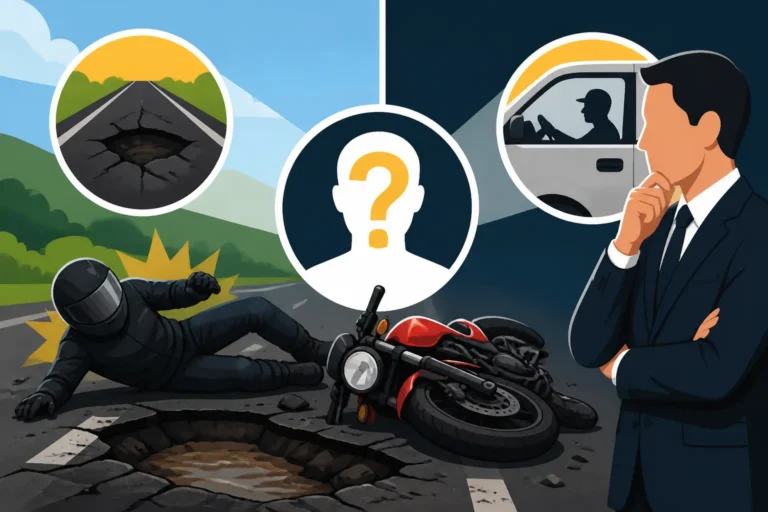
Consider a hot summer day in Arizona followed by a sudden monsoon storm. The rain hits the hot asphalt, mixing with accumulated oil and grease to create an incredibly slick surface, far more treacherous than simple rainwater. High winds can blow debris like tree branches, trash, or even entire road signs into your path without warning. Flash flooding can cover potholes or wash out sections of road, turning a routine commute into an obstacle course. In colder climates, freezing rain can lead to black ice, an invisible killer that offers no visual warning. If you hit a patch of black ice on a winding road in upstate New New York, lose control, and collide with another vehicle or a fixed object, the question arises: Was the road hazard the primary cause, or did your speed or riding style contribute? This is where Road Hazards Motorcycle Accidents Caused by Road Hazards come into play, and determining government liability for road maintenance can become a factor.
How Weather Complicates Fault Determination in a Crash
When a motorcycle accident occurs in ideal conditions, determining fault can be challenging enough. Introduce adverse weather, and the complexities multiply significantly. Insurance companies and courts must consider not only the actions of each party but also how the environmental conditions influenced those actions and what a "reasonable" driver or rider would do in similar circumstances.
The "Act of God" Defense and Its Limitations
You might hear the term "Act of God" in discussions about weather-related accidents. This legal defense suggests that an event was caused solely by natural forces, unpredictable and unavoidable, thereby absolving any human party of fault.
For example, if a massive tree, weakened by a storm, suddenly falls onto your motorcycle as you're riding, that might truly be an "Act of God." However, this defense has very strict limitations. It typically doesn't apply if the weather condition was foreseeable and preventable to some degree. A sudden rainstorm, while natural, is not usually considered an "Act of God" that excuses a driver from their duty of care. Drivers are expected to anticipate common weather changes and adjust their driving accordingly. If a car driver hydroplanes into your lane during a heavy rain shower, they can't simply claim "Act of God" if a jury finds they were driving too fast for the conditions or had bald tires. The core question becomes: could a reasonable person have avoided the accident by adjusting their behavior to the known weather conditions? This is why How Fault Is Determined in Motorcycle Accidents requires a detailed analysis of all contributing factors, not just the weather itself.
Driver Duty of Care in Adverse Conditions
All drivers on the road owe a "duty of care" to others, meaning they must operate their vehicles safely and responsibly. This duty intensifies when weather conditions deteriorate.
When driving in rain, fog, or snow, car drivers are legally obligated to slow down, increase following distances, and use their headlights. Failing to do so can be considered negligence, even if the weather was a contributing factor to the crash. For instance, if a driver on a highway in Pennsylvania fails to turn on their headlights in heavy rain and makes an unsafe lane change, causing a motorcyclist to swerve and crash, the driver's negligence would likely be considered the primary cause, despite the rain. The expectation is that drivers will take reasonable precautions. If they don't, and their lack of caution leads to an accident, they can still be held liable. This is particularly relevant when considering Unsafe Lane Changes Motorcycle Accidents Caused by Unsafe Lane Changes.
Rider Responsibility and the Reasonable Person Standard
While other drivers have a duty of care, motorcyclists are also held to a standard of "reasonable care." This means you, as a rider, are expected to operate your motorcycle safely and adjust to prevailing weather conditions.
If you choose to ride your Harley-Davidson in a blizzard at highway speeds, and an accident occurs, you will likely be found at least partially at fault due to your own negligence. The "reasonable person" standard asks: what would an ordinary, prudent motorcyclist do in similar circumstances? This might mean slowing down significantly, postponing a trip, or choosing an alternate route. However, this doesn't mean you're expected to be superhuman. If you're riding cautiously in a sudden, unexpected downpour, and another driver acts recklessly, your careful riding would strengthen your claim. The problem is, Rider Bias in Fault Determination often comes into play, with insurance adjusters or even juries unfairly assuming a motorcyclist was riding dangerously simply because they were on a bike in bad weather. It's crucial to be able to demonstrate you took all reasonable precautions.
Specific Weather Conditions and Associated Fault Scenarios
Different types of weather present unique challenges and can shift the focus of fault in distinct ways. Let's delve into some common scenarios.
Rain, Sleet, and Hydroplaning Risks
Rain is perhaps the most common adverse weather condition motorcyclists face. It instantly reduces visibility, compromises tire grip, and can lead to dangerous hydroplaning.
If a car driver loses control due to hydroplaning and strikes your motorcycle, the critical question for fault is usually: was the driver operating their vehicle safely for the conditions? If they were speeding, had worn tires, or failed to maintain a safe following distance, they could be found at fault. For instance, a driver in Florida known for its sudden, heavy rains, who speeds through a puddle and hydroplanes into your lane, would likely be deemed negligent. On the other hand, if you, as the motorcyclist, were also speeding or executing aggressive maneuvers on wet pavement, your actions could lead to a finding of Shared Fault in Motorcycle Accidents. It's a fine line, and often, an accident reconstruction expert may be needed to determine speeds, braking distances, and how water on the road contributed.
Ice, Snow, and Black Ice Dangers
Ice and snow are perhaps the most dangerous conditions for motorcyclists, making riding virtually impossible and highly inadvisable. Black ice, in particular, is insidious because it’s nearly invisible.
Imagine riding early morning in Colorado during winter, and you encounter a patch of black ice on a shaded section of road, causing you to slide out. If another driver then hits your downed motorcycle, who is at fault? If the other driver was also driving too fast for icy conditions or distracted, they could still bear significant fault. However, if you chose to ride in known icy conditions, your own judgment could be questioned, potentially leading to a finding that When a Rider Is Partially at Fault. In such extreme conditions, the expectation for all drivers to exercise extreme caution is at its highest. Some states, like Michigan, have specific advisories or laws regarding operating vehicles in certain snow depths or icy conditions, which can impact fault determination.
Wind, Fog, and Sun Glare
While not precipitation, wind, fog, and sun glare pose serious threats and unique fault considerations.
- Wind: High crosswinds can literally push a motorcycle across a lane, especially larger bikes on bridges or open highways. If a driver encroaches on your lane and claims they didn't see you because of the wind shaking your bike, their claim might be dismissed if they were distracted or not maintaining their lane. However, if you lost control due to a sudden gust and drifted into their lane, fault could be assigned to you for failing to anticipate the wind or adjust your speed. This often comes down to the specifics of how the accident happened and whether the wind was truly an unavoidable force or something a prudent rider should have managed.
- Fog: As discussed, fog severely limits visibility. If a car driver rear-ends you in heavy fog, their failure to reduce speed and maintain a safe following distance would be a primary factor in fault. If you were riding without proper lighting or reflective gear in fog, that could also contribute to shared fault.
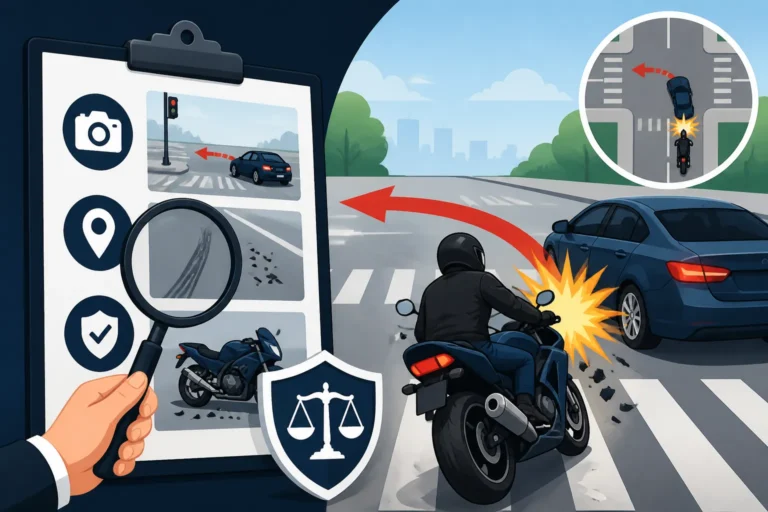
- Sun Glare: This is a surprisingly common cause of accidents. The sun low on the horizon can completely blind drivers, making it impossible to see a motorcyclist. If a driver turns left directly into your path because they were blinded by sun glare, they might claim the glare was an "Act of God." However, the law generally holds that drivers must take steps to mitigate glare, such as using sun visors, sunglasses, or even pulling over until visibility improves. Their failure to do so, leading to an Intersection Accidents Motorcycle Accidents Caused by Intersection Accidents, would likely put the fault squarely on them.
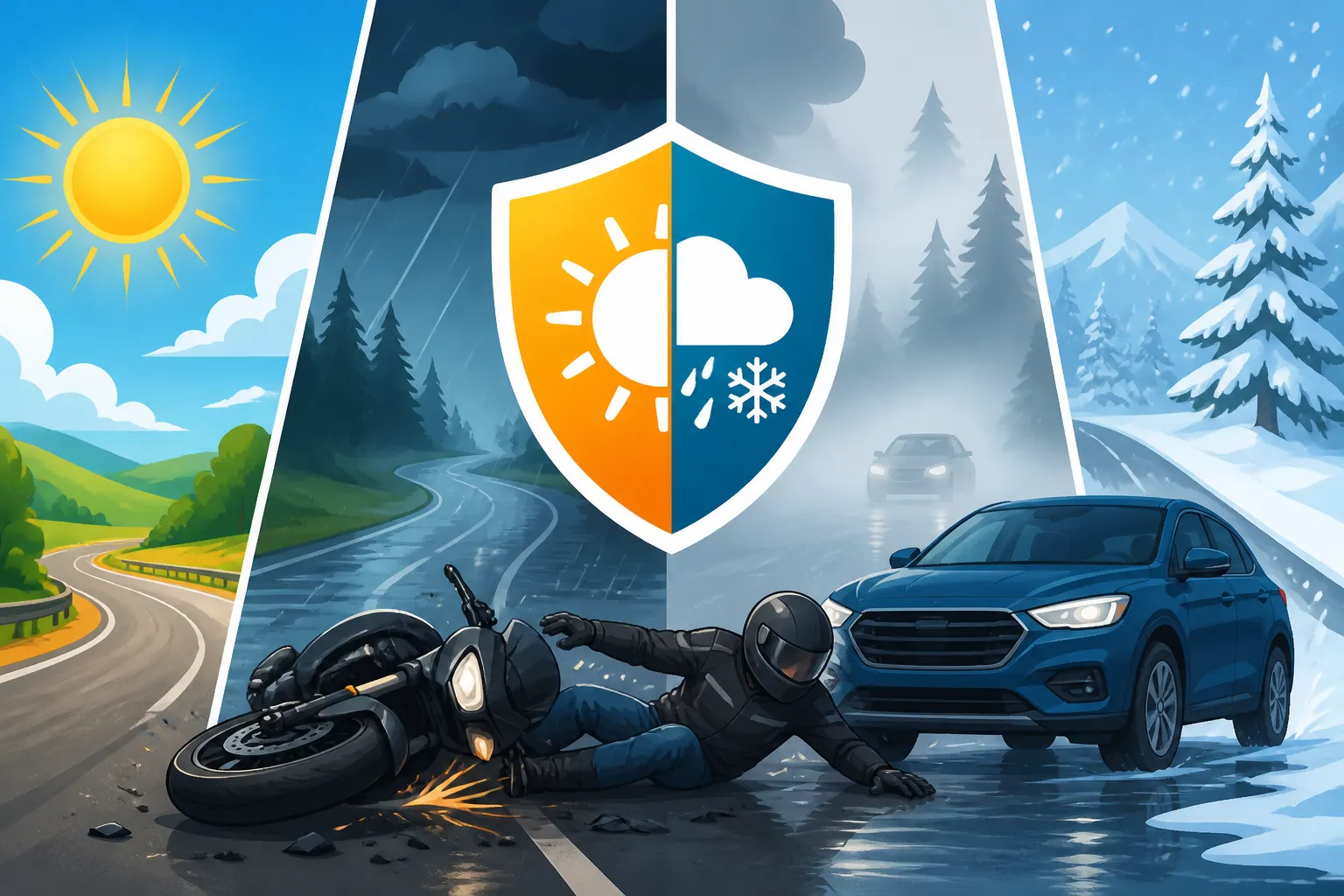
Here's a quick overview of common weather effects and fault considerations:
| Weather Condition | Primary Hazard | Driver Duty of Care | Rider Responsibility | Potential Impact on Fault |
|---|---|---|---|---|
| Rain/Wet Roads | Reduced traction, hydroplaning, poor visibility | Reduce speed, increase following distance, use lights, good tires | Reduce speed, avoid aggressive maneuvers, good tires | Driver at fault for speeding/negligence; Rider partially at fault for reckless riding in wet conditions |
| Snow/Ice/Black Ice | Extremely low traction, black ice, poor visibility | Avoid unnecessary travel, extreme caution, slow speed, winter tires | Avoid riding, extreme caution if necessary | Driver at fault for reckless driving in severe conditions; Rider highly likely to be partially at fault for riding in severe conditions |
| Fog | Severely reduced visibility | Use low beams, slow speed, increase following distance | Use proper lighting, reflective gear, slow speed, pull over if severe | Driver at fault for speeding/negligence; Rider partially at fault for inadequate visibility measures |
| High Winds | Loss of stability, debris | Maintain lane, anticipate objects, caution around large vehicles | Reduce speed, anticipate gusts, secure loose gear, avoid riding in extreme winds | Driver at fault for lane deviation/negligence; Rider partially at fault for loss of control due to excessive speed for conditions |
| Sun Glare | Impaired visibility | Use visor/sunglasses, slow down, pull over if blinded | Use visor/sunglasses, increase following distance, anticipate blind spots | Driver at fault for failure to mitigate glare/negligence; Rider rarely at fault unless other contributing factors |
Protecting Your Claim When Weather Plays a Role
Navigating a motorcycle accident claim where weather is a factor can be incredibly difficult. Insurance companies often try to shift blame to the "dangerous conditions" or, worse, to the motorcyclist directly, relying on unfair biases. This is why being prepared and documenting everything is absolutely vital.
Documenting Weather Conditions at the Scene
The moments after a crash are chaotic, but gathering evidence of the weather can make a huge difference in proving fault. This is part of What to Do Immediately After a Motorcycle Accident.
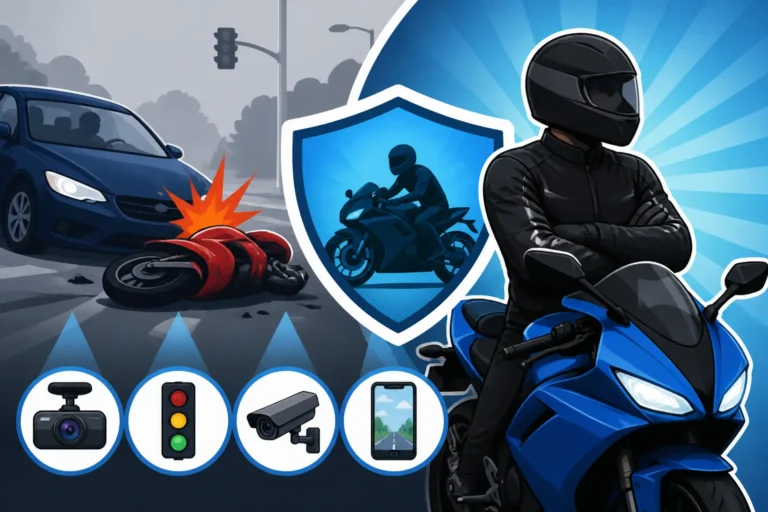
Take photos and videos not just of the damage and injuries, but also of the environment. Get shots of:
- The sky: Is it raining, snowing, or foggy?
- The road surface: Are there puddles, ice patches, standing water, or debris?
- Visibility: Capture how far you can see. If the sun is glaring, try to get a photo of it from the other driver's perspective (if safe).
- Weather radar on your phone: A screenshot of the local weather radar or forecast from your phone at the time of the accident can be powerful evidence. Note the temperature if possible, especially if ice was a factor.
- Witness statements: Ask witnesses if they observed the weather conditions and how they might have impacted visibility or road conditions.
These details provide tangible proof that the weather was a significant factor, making it harder for the other side to downplay its role or unfairly blame you.
Gathering Evidence to Support Your Actions
It's not enough to prove the weather was bad; you also need to demonstrate that you, as the rider, were acting reasonably and prudently given those conditions. This falls under Motorcycle Accident Evidence for Proving Fault.
- Riding gear: Were you wearing appropriate gear for the conditions? A rain suit, fog-resistant visor, or reflective clothing can show you were prepared.
- Motorcycle condition: Were your tires in good condition with proper tread depth? Were your lights functional? Documenting your bike's maintenance can counter claims of mechanical failure exacerbated by weather.
- Route planning: Did you choose a safer, less exposed route due to the forecast? This shows foresight.
- Dashcam/Helmet Cam footage: If you have a camera on your bike or helmet, footage can be invaluable. It provides an objective record of your speed, your actions, and the actual visibility and road conditions from your perspective. This can directly contradict false claims from the other driver or show their negligence clearly.
- Police Report: A police report will often note weather conditions. While not always perfect, it provides an official record of the environment. If the officer's report doesn't accurately reflect the severe weather, you need to understand How to Correct a Wrong Police Report.
The Importance of Timely Medical Attention and Legal Counsel
No matter the weather, your health is paramount. After securing the scene, seeking immediate medical attention is critical. Not only is it vital for your recovery, but it also creates an official record of your injuries, which is crucial for any claim.
Following this, consult with a motorcycle accident attorney who understands the nuances of weather-related claims. They can help you gather expert testimony, such as from meteorologists or accident reconstruction specialists, to prove how the weather contributed to the crash and how it affected both your and the other driver's ability to react. An experienced lawyer can also counter insurance company tactics that try to use the weather, or unfair stereotypes about riders, to minimize your claim. They know how to present your case effectively, demonstrating that even in challenging conditions, the other party's negligence was the primary cause of your injuries and damages. Without strong legal representation, fighting these complex fault arguments can feel like an uphill battle.
Disclaimer
Please remember that this information is for educational purposes only and does not constitute legal advice. Every motorcycle accident claim is unique, and the specifics of your situation, including the laws in your state, will dictate the best course of action. It is highly recommended to consult with a qualified legal professional specializing in motorcycle accidents for personalized advice.