The Helmet Defense Explained
When you've been in a motorcycle accident, the last thing you expect is to have the very gear meant to protect you turned into an argument against your claim. Yet, it happens all too often. Insurance companies, always looking for ways to reduce payouts, frequently employ what's known as the "helmet defense," attempting to shift blame for your injuries back to you, even if the other driver was clearly at fault for the collision itself. This guide will meticulously break down the helmet defense, explaining what it is, how it works, and most importantly, how to protect your rights and your claim.
Understanding the "Helmet Defense" in Motorcycle Accident Claims
Imagine you're cruising down a scenic highway in Arizona, enjoying the ride, when suddenly a car makes an illegal lane change, hitting you. You sustain severe head injuries. Even though the driver was clearly negligent, their insurance company might argue that your injuries would have been less severe, or even avoided, had you been wearing a helmet. This argument is the essence of the "helmet defense."
Defining the Helmet Defense
The helmet defense is a legal argument used by defendants, typically insurance companies, in motorcycle accident claims. It posits that a rider's injuries, particularly head injuries, were either caused or exacerbated by their failure to wear a helmet, or to wear a DOT-compliant helmet, even if another party was responsible for the initial collision. It's a subtle but powerful tactic that shifts the focus from who caused the crash to who is responsible for the severity of the injuries. This defense doesn't necessarily argue that you were at fault for the accident itself, but rather that you were negligent in mitigating your potential injuries.
For instance, if a driver runs a red light and hits you, causing you to suffer a broken leg and a concussion, the insurance company isn't disputing their driver ran the light. Instead, they might argue that if you had worn a proper helmet, you might not have suffered the concussion, or at least it would have been less severe. They're trying to reduce the amount they have to pay for your medical bills, lost wages, and pain and suffering related to that specific head injury.
Why Insurers Employ This Strategy
Insurance companies are businesses, and their primary goal is to minimize payouts on claims. The helmet defense is a highly effective tool in their arsenal for several reasons. Firstly, it taps into prevailing biases and stereotypes against motorcyclists. Unfortunately, many people, including potential jurors, sometimes view riders as reckless, regardless of the actual circumstances of an accident. This societal perception makes it easier for insurers to suggest that a rider contributed to their own harm.
Secondly, the defense directly targets the most severe and costly injuries – traumatic brain injuries (TBIs). These injuries often require extensive, long-term medical care, rehabilitation, and can lead to significant lost earning capacity, meaning higher settlement demands. By successfully arguing that helmet non-use contributed to a TBI, insurers can significantly reduce their financial exposure. They are attempting to reduce the total amount of compensation, which directly impacts your potential Motorcycle Accident Settlement Amounts. They might offer a lowball settlement early on, hoping you won't realize the full extent of their tactics.
The Psychological Impact on Riders
For a rider who has just survived a harrowing accident, dealing with painful injuries, and facing mounting medical bills, having an insurance company suggest that their own actions contributed to their harm can be incredibly frustrating and emotionally taxing. It feels like victim-blaming. You were adhering to traffic laws, riding safely, and still, you were hit. Now, instead of focusing solely on the negligent driver, you're forced to defend your personal choices about protective gear. This can add a significant layer of stress and complexity to an already overwhelming situation, making it crucial to understand your rights and how to fight an unfair fault assignment.
How Helmet Laws Vary by State and Their Impact
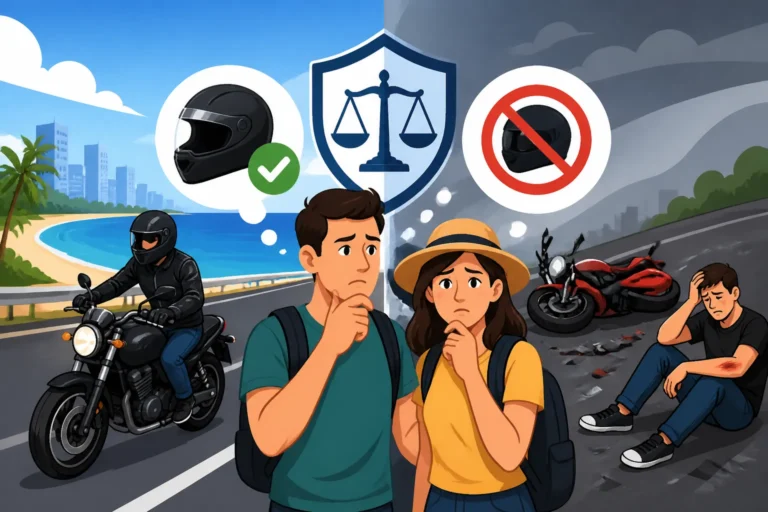
The legal landscape surrounding motorcycle helmets is far from uniform across the United States. Each state has its own specific regulations, and these variations play a significant role in how the helmet defense is applied and its potential impact on your accident claim. Understanding your state's particular laws is the first step in preparing for this defense.
Universal Helmet Laws
In states with universal helmet laws, all motorcycle riders and passengers, regardless of age or experience, are legally required to wear a DOT-compliant helmet while operating or riding on a motorcycle. States like California and New York fall into this category. If you’re involved in an accident in a universal helmet law state and were not wearing a helmet, it can be a significant hurdle for your claim.
The defense attorney will argue that you were in direct violation of the law, which can sometimes be presented as prima facie evidence of negligence (negligence per se) for your injuries. However, even in these states, the defense still has to prove a direct causal link between your lack of helmet and your specific injuries. For example, if you sustained only a broken leg and road rash on your arms, the fact that you weren't wearing a helmet might be mentioned, but it would be much harder to argue it caused those particular injuries. Still, the violation of law itself can negatively influence a jury, so compliance is always the safest bet. You can learn more about specific regulations in our guide to Motorcycle Helmet Laws by State.
Partial Helmet Laws
Many states operate under partial helmet laws. These laws typically require helmets for riders and passengers under a certain age (often 18 or 21) or, in some cases, for those without specific levels of insurance coverage. Florida and Texas are prime examples of states with partial helmet laws. In Florida, for instance, riders over 21 are exempt from the helmet requirement if they carry at least $10,000 in medical benefits insurance.
If you're an adult rider over 21 in Florida, meet the insurance requirements, and choose not to wear a helmet, you are legally compliant. In such a scenario, the helmet defense cannot argue that you violated the law. However, they can still argue that your failure to wear a helmet contributed to the severity of your head injuries, regardless of legal compliance. Here, the argument shifts purely to injury mitigation rather than legal infraction. It can still impact your claim, but the lack of a legal violation can strengthen your position, as it removes the "reckless lawbreaker" label.
States with No Helmet Laws for Adults
While increasingly rare, a few states have no universal helmet law for adult riders. New Hampshire, for example, allows adult riders to decide for themselves whether to wear a helmet. In these states, the helmet defense cannot rely on a legal violation at all. The entire argument hinges on whether wearing a helmet would have prevented or reduced the specific head injuries suffered.
This doesn't mean the defense is toothless, but it does mean the burden of proof is entirely on the defense to show that a helmet would have made a difference. They cannot point to a statute you broke. Instead, they must bring in medical and biomechanical experts to argue that your injuries are a direct result of not wearing a helmet and that a helmet would have substantially protected you. This often makes it a more challenging argument for the defense to win outright, especially if your injuries are not solely head-related.
The Legal Mechanism: Comparative and Contributory Negligence
The effectiveness of the helmet defense is inextricably linked to the negligence laws of the state where the accident occurred. Different states follow different doctrines for assigning fault and how that fault impacts a claimant's ability to recover damages. These rules determine whether a jury's finding that your helmet non-use contributed to your injuries will simply reduce your compensation or bar it entirely. Our comprehensive guide on Comparative Negligence in Motorcycle Accidents delves deeper into these nuances.
Contributory Negligence States
A handful of states still adhere to the strict rule of pure contributory negligence. In these states, if you are found to be even 1% at fault for your injuries (not necessarily the accident itself), you are completely barred from recovering any damages from the at-fault driver. States like Alabama, Maryland, North Carolina, and Virginia, along with the District of Columbia, follow this harsh rule.
Imagine you're riding in Maryland without a helmet (which is legal for adults over 18 in certain circumstances, but still subject to the helmet defense). Another driver pulls out in front of you without yielding, causing a collision. You suffer a traumatic brain injury. If the insurance company successfully argues that your failure to wear a helmet contributed at all to that brain injury, a jury could find you contributorily negligent for your own harm. In such a case, even if the other driver was 99% at fault for causing the crash, you might receive absolutely no compensation for your injuries. This makes the helmet defense incredibly powerful and dangerous for riders in these states.
Pure Comparative Negligence States
Most states have adopted some form of comparative negligence. Under pure comparative negligence, a claimant can recover damages even if they are largely at fault, but their compensation will be reduced by their percentage of fault. California, Florida, and New York are examples of states with pure comparative negligence.
Let's say you're riding in California, where helmets are mandatory. You're hit by a distracted driver who was texting, but you weren't wearing a helmet. You sustain a severe concussion. A jury might find the distracted driver 90% at fault for causing the accident and your injuries, but also find you 10% at fault for the severity of your head injury due to not wearing a helmet. If your total damages were $500,000, your award would be reduced by 10%, meaning you would receive $450,000. In these states, the helmet defense can certainly reduce your payout, but it won't typically eliminate it entirely, unless your percentage of fault for your injuries reaches 100%. This is how the helmet defense reduces settlements.
Modified Comparative Negligence States
The most common form of negligence law is modified comparative negligence, which includes a "bar" to recovery if your fault reaches a certain threshold. There are two main types:
- 50% Bar Rule: In states like Ohio, Georgia, and Arizona, you can recover damages as long as your fault is 50% or less. If a jury finds you 51% or more at fault for your injuries, you recover nothing.
- 51% Bar Rule: States like Texas, Illinois, Michigan, Pennsylvania, Washington, and Tennessee follow this rule. You can recover as long as your fault is 51% or less. If a jury finds you 52% or more at fault for your injuries, your claim is barred.
Consider a scenario in Texas, which has a 51% bar rule. You're hit by a driver who failed to yield, causing you a severe TBI. You were not wearing a helmet, which is optional for adults over 21 with insurance in Texas. The defense successfully argues that your failure to wear a helmet contributed significantly to the severity of your TBI. If the jury apportions 60% of the fault for the TBI to the other driver but 40% to your helmet non-use, you would still be able to recover 60% of your damages related to that TBI. However, if the jury finds you 52% responsible for the severity of your head injury (even if the other driver was 100% at fault for the crash itself), you would receive nothing for those head injury damages under the 51% bar rule. This demonstrates how crucial the percentage of fault assigned to helmet non-use can be in modified comparative negligence states.
Proving Causation: Did Not Wearing a Helmet Actually Cause or Worsen Injuries?
At the heart of the helmet defense is the concept of causation. It’s not enough for the defense to merely point out that you weren't wearing a helmet. They must demonstrate a direct, tangible link between the absence of a helmet and the specific injuries you sustained. This is often the most contentious part of these cases and requires rigorous legal and medical scrutiny.
The Burden of Proof
In nearly all jurisdictions, when the helmet defense is raised, the burden of proof rests squarely on the defendant (the at-fault driver's insurance company). They must affirmatively prove two things:
- You were not wearing a helmet (or a proper, DOT-compliant one) at the time of the accident. This is usually straightforward to establish through police reports, witness statements, or even your own admission.
- Your failure to wear a helmet actually caused or substantially worsened the head injuries you suffered. This is where things get complicated. The defense cannot simply assert that "helmets save lives"; they must connect the dots directly to your specific injuries in your specific accident.
For instance, if you suffered a traumatic brain injury, the defense would need to present evidence showing that if you had worn a helmet, that particular TBI would have been prevented or significantly mitigated. If you only had a minor concussion, but also a broken pelvis and internal injuries, the defense would have a much harder time arguing the helmet defense impacts the entirety of your claim, though they might still try to reduce the TBI portion. This is why immediate medical attention and thorough documentation of all injuries are paramount.
Injury Specificity and Medical Experts
The helmet defense is only relevant to injuries that a helmet could plausibly protect against. This typically means head and facial injuries. If your injuries consist solely of a broken leg, road rash on your back, or internal organ damage from the impact, then the fact that you weren't wearing a helmet is largely irrelevant to those specific injuries, and the defense holds little to no weight.
However, if you suffer a concussion, skull fracture, or other brain injury, the defense will focus intensely on this. They will likely hire medical experts, such as neurologists or neurosurgeons, and possibly biomechanical engineers. These experts will review your medical records, the accident report, photos of the scene, and even accident reconstruction data. They will then attempt to testify that, based on the forces involved in the collision and the mechanics of head trauma, a properly worn, DOT-compliant helmet would have absorbed or redirected enough energy to prevent or lessen your particular head injury.
This is where your legal team will need to counter with their own experts, who can highlight the limitations of helmet protection, the specific angles of impact, or argue that the forces involved were so extreme that even a helmet would not have prevented the injury, or that your injury was caused by forces unrelated to a direct head impact.
When the Defense Doesn't Apply
It's crucial to understand that the helmet defense isn't a blanket dismissal of your claim. It has very specific boundaries. The defense generally does not apply to:
- Non-head injuries: As mentioned, a helmet offers no protection against a broken arm, leg, or internal injuries. Any damages sought for these types of injuries are typically not subject to reduction by the helmet defense.
- Property damage: The cost to repair or replace your motorcycle, or any other personal property damaged in the crash, is completely unrelated to whether you wore a helmet.
- Emotional distress or pain and suffering not directly tied to head injuries: While harder to separate, if your emotional trauma stems from the overall experience of the crash or other injuries, the helmet defense might have less impact.
Moreover, if you were wearing a DOT-compliant helmet, the defense is usually neutralized, unless the insurer tries to argue the helmet was defective or improperly worn. Even then, proving that is another significant hurdle for them. This underlines the importance of preserving your helmet and all other protective gear after an accident, as detailed in Protective Gear as Evidence in a Claim.
Evidence and Expert Testimony in Helmet Defense Cases
When the helmet defense is actively employed by an insurance company, the legal proceedings quickly become a battle of evidence and, more specifically, expert testimony. Both sides will marshal their resources to either prove or disprove the causal link between helmet use and the severity of injuries. This often involves highly specialized professionals who can interpret complex data and medical findings.
Accident Reconstructionists
Accident reconstructionists are crucial in motorcycle accident cases, especially when the helmet defense is in play. These experts, often former law enforcement officers or engineers, analyze the physics of the crash. They examine:
- Skid marks and gouges: To determine vehicle speeds and impact points.
- Vehicle damage: To understand the forces involved and direction of impact.
- Debris fields: To pinpoint where the initial impact occurred.
- Body positioning: Based on witness accounts or photos, they can infer how the rider impacted the ground or other objects.
Their goal is to create a detailed scientific model of the accident. For the defense, an accident reconstructionist might attempt to show the trajectory of the rider's head, the specific point of impact with the ground or another vehicle, and how a helmet would have absorbed or deflected that impact. On the other hand, your legal team's reconstructionist might argue that the impact forces were so severe that a helmet wouldn't have prevented the injury, or that the injury occurred due to rotation or deceleration trauma, which helmets have limitations in preventing. Their findings can significantly influence a jury's understanding of How Fault Is Determined in Motorcycle Accidents.
Medical Experts and Biomechanical Engineers
These are arguably the most critical experts in a helmet defense case.
- Medical Experts (e.g., Neurologists, Neurosurgeons, Orthopedists): These doctors will review all your medical records, imaging (CT scans, MRIs), and treatment plans. The defense's medical expert will opine on the nature of your head injury, its likely mechanism, and whether, in their professional opinion, a helmet would have altered the outcome. They might review studies on helmet efficacy to support their claims. Your medical experts, conversely, will provide a counter-narrative, perhaps highlighting that your specific injury was not solely due to direct impact but rather rotational forces, or that the severity of the impact made any helmet's protective capacity irrelevant.
- Biomechanical Engineers: These specialists bridge the gap between engineering and human biology. They study how mechanical forces affect the human body. In a helmet defense context, they analyze the forces involved in the accident and simulate how those forces would have translated to your head, with and without a helmet. They can testify on helmet design, impact absorption properties, and the thresholds for various head injuries. The defense might use them to show that the energy transmitted to your brain would have been significantly lower with a helmet. Your experts might counter by arguing about the specific type of impact (e.g., oblique vs. direct), the limitations of helmet testing standards, or the specific helmet design's inability to prevent your particular injury.
Police Reports and Witness Statements
While not always definitive on causation, police reports and witness statements often provide critical initial documentation regarding helmet use.
- Police Reports: The responding officer's report will typically note whether a helmet was worn, its condition (if found), and any visible head injuries. This initial observation can be a powerful piece of evidence establishing the baseline for the defense's argument. However, police reports often reflect preliminary observations and might not delve into the nuanced causality of injuries. It's important to remember that How Police Reports Establish Fault is not always the end of the story, and they can sometimes contain inaccuracies.
- Witness Statements: Eyewitnesses might testify to whether they saw the rider wearing a helmet immediately before or after the crash. While less scientific than expert testimony, a credible witness can reinforce or contradict the claim of helmet non-use. Sometimes, witnesses might also describe the nature of the impact, which could support or detract from the defense's argument about the severity of head trauma.
The combination of these various forms of evidence, interpreted by skilled experts, forms the backbone of how the helmet defense is presented and challenged in court.
Strategies to Counter the Helmet Defense
Facing the helmet defense can feel daunting, as it attempts to shift blame for your injuries. However, there are several powerful strategies to effectively counter this argument and protect your motorcycle accident claim. A knowledgeable legal team will be essential in implementing these tactics.
Demonstrating No Causal Link
This is often the most effective and direct way to nullify the helmet defense. The core of this strategy is to prove that your head injuries either:
- Were not, in fact, head injuries: Perhaps the defense is mischaracterizing another injury as a head injury, or you have no significant head trauma.
- Would have occurred regardless of helmet use: This is particularly relevant in high-speed or severe impacts where the forces involved are so extreme that even the best helmet might not prevent certain types of brain trauma, like diffuse axonal injury caused by rotational forces.
- Were not the type of injury a helmet is designed to prevent: For example, a severe spinal cord injury from whiplash, or certain facial lacerations, might occur even with a full-face helmet.
Your legal team will work closely with medical experts and accident reconstructionists to meticulously analyze the precise nature of your injuries, the dynamics of the collision, and the specific impact points. They will argue that, based on scientific evidence, the absence of a helmet did not cause or worsen your specific injuries, or that the injuries you sustained were due to other factors entirely, such as violent rotation of the head and neck, not direct impact.
Challenging the Expert Testimony
Since the helmet defense relies heavily on expert testimony from medical professionals and biomechanical engineers, a crucial counter-strategy involves challenging the credibility, methodology, or conclusions of the defense's experts. This can involve:
- Deposing the defense experts: Your attorney will question their qualifications, their understanding of the specific accident, and the scientific basis for their opinions. They might probe for any biases or limitations in their analysis.
- Introducing your own experts: As discussed, your legal team will bring in their own medical and biomechanical experts. These experts will provide alternative explanations for your injuries, dispute the defense's simulations, or highlight inconsistencies in their findings. For instance, your biomechanical expert might explain that while helmets protect against linear impacts, they are less effective against rotational forces, which could have been the primary cause of your TBI.
- Cross-examination: In court, your attorney will vigorously cross-examine the defense's experts, poking holes in their arguments, exposing any weaknesses in their data, or demonstrating that their conclusions are speculative rather than scientifically sound.
The goal is to convince the jury that the defense's expert opinions are not reliable enough to prove a direct causal link between your helmet non-use and your specific injuries.
Leveraging Motorcycle Helmet Laws by State
While failing to wear a helmet can be a negative factor, the legal context matters immensely. If you were compliant with your state's Motorcycle Helmet Laws by State, this significantly weakens the defense's argument, especially if they are trying to imply you were breaking the law.
For example, if you're an adult rider over 21 in a state with a partial helmet law (like Florida) and met the insurance requirements to legally ride without a helmet, your attorney will emphasize this point. They will argue that while the defense can still discuss injury mitigation, they cannot accuse you of illegal or negligent behavior by violating a statute. This helps to combat the negative stereotypes often associated with motorcyclists and focuses the jury's attention purely on the scientific question of causation rather than legal compliance. It reframes the argument from "you broke the law" to "even though you followed the law, you could have done more," which is a less damning accusation.
Remember, even in states with no helmet laws for adults, the defense might still be raised, but the lack of a legal requirement further shifts the burden to the defense to prove pure injury mitigation without the aid of a statutory violation. Your legal team's ability to navigate these specific state laws is paramount in protecting your claim.
The Importance of DOT-Compliant Helmets and Proper Gear
While the focus of the "helmet defense" is on whether a helmet was worn, or not worn, it’s equally important to discuss the type of helmet. Not all head coverings offer the same level of protection, and legal standards differentiate between them. Furthermore, the role of other protective gear extends far beyond just head protection, playing a crucial part in your overall safety and legal standing. You can find excellent options for all kinds of gear at places like Cycle Gear, ensuring you're well-protected on every ride.
DOT Standards and Certification
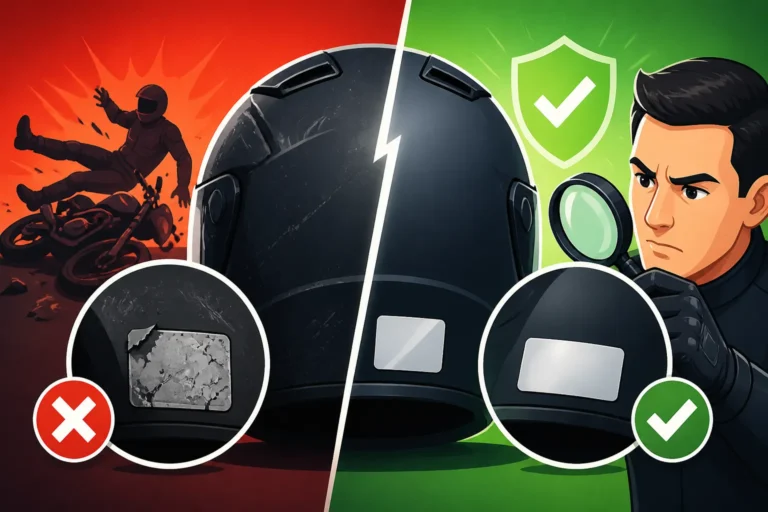
The U.S. Department of Transportation (DOT) sets minimum performance standards for motorcycle helmets. A helmet that meets these standards is considered "DOT-compliant." This means it has undergone rigorous testing to ensure it can absorb significant impact energy, distribute forces effectively, and remain securely on the rider's head during a crash. Look for the DOT sticker on the back of any helmet you purchase.
Beyond DOT, other certifications like Snell Memorial Foundation (Snell) and Economic Commission for Europe (ECE) offer even higher standards of protection. Helmets with these certifications provide an additional layer of safety. If you were wearing a DOT-compliant (or Snell/ECE certified) helmet during an accident, and the defense attempts to use the helmet defense, your attorney can easily refute it. Your compliance demonstrates you took reasonable steps to protect yourself, significantly undermining any argument that your injuries were due to inadequate head protection. This also reinforces the overall narrative that you are a responsible rider, which can subtly influence a jury. Knowing What Is a DOT-Compliant Helmet is crucial for both safety and legal protection.
The "Novelty Helmet" Trap
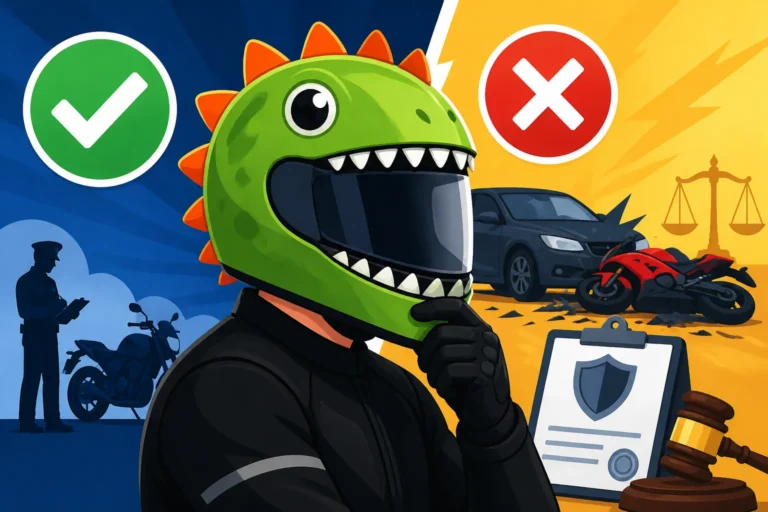
One of the biggest pitfalls riders can fall into is wearing a "novelty helmet." These are typically thin, skull-cap style helmets that might look cool, but offer minimal to no impact protection. They do not meet DOT standards and often carry disclaimers stating they are not safety devices.
From a legal standpoint, wearing a novelty helmet can be just as detrimental as wearing no helmet at all. In fact, in some cases, it can be worse, as it creates a false sense of security. An insurance company can easily argue that since the novelty helmet offered no real protection, your head injuries were a direct consequence of wearing an inadequate device. They might even try to claim that the helmet itself exacerbated the injuries by breaking apart and causing lacerations or by providing a hard point that transferred force inefficiently. If you were wearing a novelty helmet, the helmet defense will likely proceed as if you had no helmet on, potentially impacting your claim as severely as if you had been completely unprotected.
Beyond Helmets: Other Protective Gear
While the "helmet defense" specifically targets head protection, the broader principle of mitigating injuries through protective gear extends to your entire body. Wearing appropriate motorcycle-specific clothing can significantly reduce the severity of injuries and, consequently, weaken an insurance company's arguments about your "contributory negligence" for those specific injuries. Essential gear includes:
- Armored Jackets and Pants: Made from abrasion-resistant materials like leather or textile (e.g., Cordura), with CE-rated armor in critical areas like shoulders, elbows, hips, and knees. This significantly reduces road rash, cuts, and even some fractures. Retailers like Cycle Gear offer a wide array of options designed for protection.
- Motorcycle Gloves: Protect hands from abrasion, impact, and road debris.
- Motorcycle Boots: Designed to protect ankles and feet from crushing injuries and abrasions, offering more support than regular shoes.
If you sustain severe road rash or broken bones in your limbs, but you were wearing a protective jacket, gloves, and armored pants, your attorney can use this as evidence of your overall commitment to safety. Even if the helmet defense is raised for a head injury, showing you took precautions for the rest of your body can positively influence a jury and demonstrate that you are a responsible rider. It helps to counter the stereotype of the reckless motorcyclist and shows that you were doing everything within reason to protect yourself. In some cases, the damage to your gear can even serve as crucial Motorcycle Accident Evidence for Proving Fault and impact severity.
Navigating Your Claim When the Helmet Defense Is Raised
Being involved in a motorcycle accident is already traumatic, but having the helmet defense raised against you can add insult to injury. It’s crucial to understand that while this defense is powerful, it is not insurmountable. Proper steps and professional guidance can help you navigate this complex legal challenge and protect your right to fair compensation.
Documenting Everything
The moment an accident happens, your actions can significantly impact the strength of your future claim. Documentation is your most powerful tool against the helmet defense:
- Medical Records: Seek immediate medical attention, even if you feel fine. Some serious injuries, especially head injuries, have delayed symptoms. Comprehensive medical records detailing all your injuries, treatment, prognosis, and how your life has been affected are paramount. These records will be the primary evidence used to prove the extent of your damages and counter any claims that your injuries would have been less severe with a helmet. Make sure every symptom, no matter how minor, is documented.
- Accident Scene Photos and Videos: If possible and safe to do so, take extensive photos and videos at the accident scene. This includes damage to your motorcycle, the other vehicles involved, road conditions, traffic signs, and any visible injuries you or others sustained. Crucially, if you were wearing a helmet, take photos of it, especially if it's damaged. This can prove that you were wearing protective gear and that it may have done its job. Photos also help document who was at fault in a Left-Turn Motorcycle Accident, for example.
- Witness Information: Gather contact information from anyone who witnessed the accident. Their testimony can be invaluable, not only regarding who was at fault but also regarding your appearance immediately after the crash, including whether you were wearing a helmet.
- Injury Journal: Maintain a detailed journal of your recovery. Document your pain levels, limitations, doctor visits, medications, and how your injuries affect your daily life, work, and hobbies. This helps to quantify your pain and suffering and its long-term impact.
Early Legal Consultation
This cannot be stressed enough: if you've been in a motorcycle accident and suffered injuries, especially if you anticipate the helmet defense might be raised, contact an experienced motorcycle accident attorney as soon as possible. Do not speak with the other driver's insurance company or sign any documents without legal counsel. Insurers are adept at twisting your words to use against you.
An attorney specializing in motorcycle accidents understands the nuances of the helmet defense, how it's applied in your specific state (considering its comparative/contributory negligence laws), and what evidence is needed to counter it. They can immediately begin gathering evidence, consulting with experts, and building a strong case on your behalf. They know the tactics insurance companies use and can protect you from making crucial mistakes that could jeopardize your claim. Your lawyer will be able to explain How Fault Affects Your Settlement and guide you through the complex process.
Negotiating with Insurance Companies
Insurance adjusters are trained negotiators. When the helmet defense is in play, they will often use it to offer a significantly lower settlement than your claim is actually worth. They might even outright deny coverage for your head injuries.
Your attorney will handle all communication and negotiation with the insurance company. They will present a comprehensive demand package, including all evidence of fault, injury documentation, medical bills, lost wages, and expert reports. They will anticipate the helmet defense and preemptively counter it with legal arguments and evidence demonstrating either that you complied with the law, or that your non-helmet use did not cause or worsen your specific injuries.
If negotiations fail to produce a fair settlement offer, your attorney can advise you on the next steps, including filing a lawsuit and taking your case to trial. This proactive and informed approach is essential to maximize your motorcycle accident settlement and ensure you receive the compensation you deserve, even when faced with the helmet defense.
Disclaimer
This article is for general informational purposes only and does not constitute professional advice. Laws and regulations vary by location and change over time. Consult a qualified professional for guidance on your specific situation.