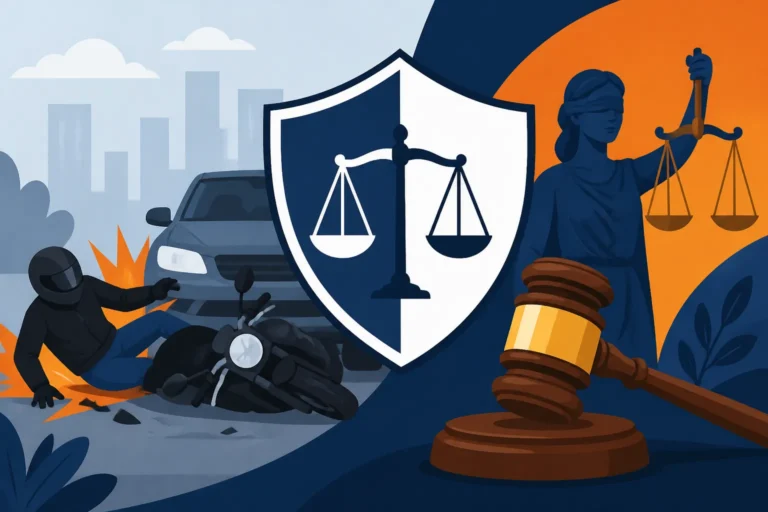
What to Do After a Motorcycle Accident
In the chaotic moments after a motorcycle accident, it’s easy to feel overwhelmed, disoriented, and scared. The roar of traffic, the sudden impact, the pain, and the sheer adrenaline can make it impossible to think clearly about what to do next. You're probably grappling with injuries, a damaged bike, and a flurry of questions about what comes next. This comprehensive guide is designed to cut through that confusion, providing clear, actionable steps to protect your health, your rights, and your future in the wake of a motorcycle crash.
Immediate Steps at the Scene of the Accident
The moments immediately following a motorcycle accident are critical. What you do or don't do in this brief window can have a profound impact on your physical recovery and any potential legal claim. It's tough to stay calm, but focusing on these first steps is paramount.
Prioritize Safety and Seek Medical Attention
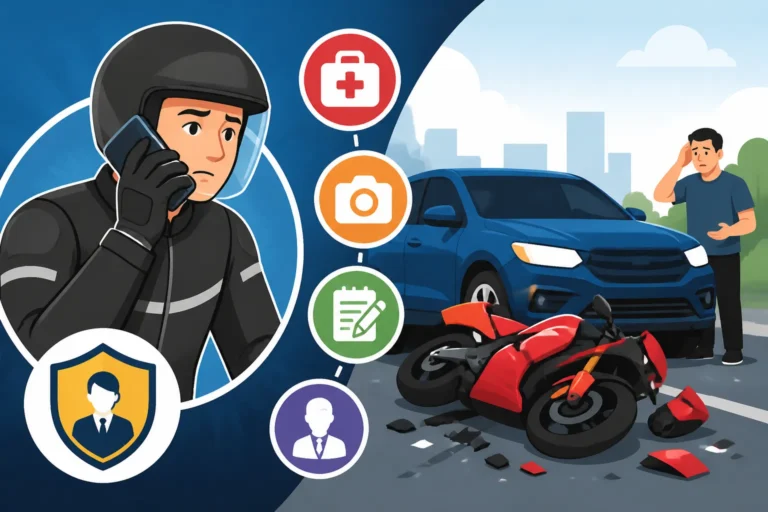
Your safety and well-being are the absolute top priority. If you can move, try to get yourself and your motorcycle out of the path of oncoming traffic to prevent further accidents. Even if you feel okay, it's crucial to assess yourself for injuries. Adrenaline is a powerful thing, and it can mask pain and symptoms of serious injuries for hours, or even days.
Do not try to tough it out or wave off help. Call 911 immediately, or have someone else do it for you. Clearly state that you've been in a motorcycle accident and describe your condition and that of anyone else involved. When emergency medical services arrive, let them examine you. Even a seemingly minor crash can lead to serious internal injuries, fractures, or concussions that aren't immediately obvious. Accepting transport to the hospital, especially for head trauma or suspected spinal injuries, is always the safest bet. Remember, even minor symptoms after an accident can escalate into major problems if left untreated. Many riders, myself included, have stories of thinking they were fine, only to wake up the next morning in excruciating pain from something they barely noticed at the scene. Ignoring medical advice or refusing examination can not only jeopardize your health but also make it harder to prove the extent of your injuries later on. The medical record starts the moment you interact with first responders and doctors.
Contact Law Enforcement
Reporting the accident to the police is a non-negotiable step. Even if the other driver tries to convince you to handle it "privately" or exchange information without involving authorities, do not agree. A police report serves as an official, unbiased account of the incident, documenting the scene, vehicles involved, initial statements, and often, their preliminary determination of fault. This document can be incredibly valuable for your insurance claim and any potential personal injury lawsuit.
When officers arrive, cooperate fully but stick to the facts. Provide your name, contact information, and insurance details. Briefly describe what happened, but avoid speculating or making assumptions about fault. If you're unsure about a detail, simply say "I don't know" or "I don't recall." Do not admit guilt or apologize for anything, as these statements can be misconstrued and used against you later by insurance companies. For instance, a simple "I'm so sorry that happened" could be twisted into an admission of fault, even if you were merely expressing empathy for the situation. Make sure to get the investigating officer's name, badge number, and the report number for future reference. Understanding How Police Reports Establish Fault is key here, as this official document often carries significant weight.
Secure the Scene and Gather Evidence
In the aftermath of a crash, while you're waiting for emergency services, if your physical condition allows, start gathering as much evidence as possible. This is where your phone becomes an invaluable tool. Take photos and videos of everything from multiple angles: your motorcycle's damage, the other vehicle's damage, the overall accident scene, road conditions (potholes, debris, skid marks), traffic signs or signals, and any visible injuries you or your passenger have sustained.
Don't just focus on the immediate impact zone; photograph the surrounding area, including intersections, weather conditions, and any relevant landmarks. These images can vividly illustrate the accident's dynamics and prove conditions that might otherwise be forgotten or disputed. For example, clear photos showing a driver texting at a red light just before they hit you can be incredibly powerful. In addition to photographic evidence, look for witnesses. People who saw the accident unfold can provide invaluable, objective accounts. Ask for their names, phone numbers, and email addresses. Their testimony can be crucial, especially if the other driver tries to dispute what happened. Finally, exchange insurance and contact information with the other driver, but again, do not engage in conversations about fault or specifics of the accident beyond what is necessary to exchange details. Collecting comprehensive Motorcycle Accident Evidence for Proving Fault is one of the most proactive things you can do to protect your claim.
Protecting Your Rights and Your Claim in the Immediate Aftermath
The period right after an accident is a whirlwind, but it's also a crucial time to safeguard your legal position. Insurance companies, unfortunately, don't always have your best interests at heart, and every action you take can impact the outcome of your claim.
Never Admit Fault or Apologize
This cannot be stressed enough: do not admit fault or apologize for anything at the scene of the accident, or in the days and weeks that follow. It’s a natural human instinct to apologize when something bad happens, even if you’re not to blame. We often say "I'm sorry" as an expression of regret for the situation, not as an admission of wrongdoing. However, in the context of a legal claim, these words can be twisted by insurance companies or opposing counsel into an admission of liability.
Even a casual remark like, "I didn't see you there" or "I should have been more careful," can be used to suggest you were at fault, or at least partially responsible, for the collision. Stick strictly to the facts of what happened, without offering opinions or taking blame. Let the police investigation and, if necessary, legal professionals determine fault. The other driver's insurance company will be looking for any reason to deny or reduce your claim, and an admission of fault, no matter how innocent the intention, gives them ammunition. This is precisely why Why You Should Never Admit Fault at the Scene is such a critical piece of advice for any rider.
Document Everything: A Rider's Personal Log
Your memory, especially after a traumatic event like a motorcycle accident, can be unreliable. The shock, pain, and stress can make details fuzzy. This is why keeping a meticulous, personal log is absolutely essential. Start as soon as you are able and continue diligently throughout your recovery. This log should include:
- Details of the accident: A narrative of what you remember, vehicle positions, time, date, weather, road conditions.
- Injuries and symptoms: Document every ache, pain, bruise, cut, and limitation, no matter how minor. Note when symptoms started, how they've progressed, and how they impact your daily life.
- Medical appointments: Keep a record of every doctor's visit, specialist consultation, therapy session, and prescription. Note the date, time, and what was discussed or prescribed.
- Lost wages and expenses: Track every hour of work missed, every penny spent on medical care, transportation to appointments, damaged gear replacement, or even help with household tasks you can no longer perform.
- Conversations: Document every interaction you have regarding the accident – with police, witnesses, insurance adjusters, or even friends and family you confide in. Note the date, time, who you spoke with, and what was said.
This detailed record will serve as a powerful personal reference and evidence base, helping you accurately recall events and demonstrate the full impact of the accident on your life. Without a detailed log, the nuances of your recovery and daily struggles might be overlooked or underestimated by others. Keeping a comprehensive log truly helps with How to Document Your Recovery in a way that supports your claim.
Notify Your Insurance Company (Carefully)
It’s a fundamental requirement of your insurance policy to report an accident promptly. Delaying notification could jeopardize your coverage. However, how you notify them and what you say is incredibly important. When you first contact your own insurance company, provide only the basic facts: your name, policy number, the date and location of the accident, and the other party's contact and insurance information if you have it.
Do not offer a detailed statement about the accident’s specifics, and absolutely refuse to give a recorded statement until you've consulted with a legal professional. Recorded statements can be edited, taken out of context, or used against you later if your recollection or understanding of events evolves. Your insurance company will investigate, but their primary goal is to minimize their payout, even if it's your own claim. If they ask about your injuries, stick to general terms like "I'm seeking medical attention" or "I'm under a doctor's care." Avoid saying you're "fine" or "okay" if you're not, or if you haven't been thoroughly checked by a doctor. Remember, your own insurance company may still be looking for ways to limit their liability, or even assign partial blame to you, which can affect future premiums and coverage. Knowing What to Do Immediately After a Motorcycle Accident includes understanding the delicate balance of informing your insurer without inadvertently harming your own position.
Understanding Your Injuries and Medical Care
Motorcycle accidents often result in more severe injuries compared to car accidents due to the lack of protective enclosure. Even if you walked away from the scene, the true extent of your injuries might not be immediately apparent. Diligent medical care is not just for your health; it's also foundational for your claim.
Seeking Comprehensive Medical Evaluation
While emergency medical treatment at the scene or hospital is critical, it's often just the beginning. It's imperative to follow through with all recommended follow-up appointments, specialist referrals, and diagnostic tests. This might include visits to your primary care physician, orthopedic surgeons, neurologists, physical therapists, or even mental health professionals. Serious conditions like a traumatic brain injury (TBI) might initially present as a headache or confusion, only to worsen over time. Similarly, whiplash or soft tissue injuries often manifest a day or two after the initial impact, causing increasing pain and restricted movement.
A continuous record of medical care not only aids your physical recovery but also creates an undeniable paper trail of your injuries and their progression. Gaps in treatment can be exploited by insurance companies, who might argue that your injuries weren't serious or that a subsequent injury caused your pain. Never skip an appointment or discontinue treatment without your doctor's explicit approval. Your long-term health is at stake, and so is the strength of your claim. The range of Common Motorcycle Accident Injuries is vast, and each requires appropriate, consistent medical attention.
Tracking Medical Expenses and Treatment Records
The financial burden of medical care after a motorcycle accident can be staggering. From ambulance rides and emergency room visits to specialist consultations, diagnostic tests, surgeries, medications, and physical therapy – every single cost adds up quickly. It is absolutely crucial to keep meticulous records of all these expenses.
Create a dedicated file, either physical or digital, where you store copies of every medical bill, prescription receipt, explanation of benefits (EOB) from your health insurance, and any other document related to your treatment. This also includes records of transportation costs to and from appointments, parking fees, and any over-the-counter medications or medical devices you purchase. These records are the concrete evidence of your "economic damages," which are quantifiable financial losses. Without clear documentation, it becomes incredibly difficult to prove the full extent of your medical expenses when negotiating with insurance companies. Accurate tracking ensures that every dollar spent on your recovery is accounted for, forming a solid basis for your claim for Medical Expenses in a Motorcycle Claim.
The Long-Term Impact of Motorcycle Accident Injuries
Motorcycle accidents frequently result in severe injuries that can have profound and lasting effects on a rider's life. Beyond the immediate pain and recovery, many common motorcycle injuries, such as road rash, traumatic brain injuries (TBI), and spinal cord injuries, can lead to chronic conditions, permanent disability, or significantly altered quality of life.
Consider a serious case of road rash, for instance. While it might seem like just a skin abrasion, deep third-degree road rash can damage nerves, require multiple skin grafts, lead to permanent scarring, and cause chronic pain and susceptibility to infection. A traumatic brain injury, even a "mild" concussion, can result in persistent headaches, memory problems, concentration issues, mood swings, and light sensitivity for months or even years. Spinal cord injuries, of course, can lead to partial or complete paralysis, fundamentally changing every aspect of a person's existence. These types of injuries often necessitate ongoing medical care, extensive rehabilitation, home modifications, assistive devices, and long-term support, incurring astronomical costs and profoundly affecting a person's ability to work, socialize, and enjoy life. Recognizing and documenting these Long-Term Effects of Motorcycle Injuries is essential for a settlement that truly reflects your losses.
Dealing with Insurance Companies and Adjusters
Navigating the world of insurance after an accident can feel like a labyrinth, especially when you're also trying to recover physically and emotionally. It’s important to remember that insurance companies are businesses, and their goal is to protect their bottom line, not necessarily your best interests.
The Insurance Adjuster's Role
Once you've reported the accident, an insurance adjuster will be assigned to your case. Whether it's your own insurance company or the at-fault driver's, remember that this individual's primary responsibility is to investigate the claim and determine the company's financial exposure. They are trained negotiators whose job is to pay out as little as possible. This isn't to say all adjusters are malicious, but their professional obligations are clear.
Adjusters will often try to get a recorded statement from you, even from your own insurance company. They might sound friendly and empathetic, but resist the urge to provide details beyond the very basic facts of the accident until you've had a chance to consult with a legal professional. They might ask leading questions or try to subtly get you to admit partial fault. They will scrutinize your medical records, looking for pre-existing conditions or gaps in treatment that they can use to devalue your claim. They also might try to pressure you into a quick settlement before the full extent of your injuries or financial losses is known. Understanding How Insurance Companies Assign Blame to Riders is crucial, as they will use every piece of information to their advantage.
Handling Settlement Offers
After their initial investigation, the insurance company will likely present you with a settlement offer. It’s a common tactic for this first offer to be a "lowball" – a significantly undervalued amount designed to make you settle quickly, especially if you're feeling financial pressure from medical bills or lost wages. Do not be surprised by this; it’s part of their standard operating procedure.
It is almost always in your best interest to reject the initial offer. Why? Because you likely don't yet know the full extent of your damages. Your medical treatment might still be ongoing, new symptoms could develop, and you might not have a clear picture of your long-term prognosis, especially if you haven't reached Maximum Medical Improvement (MMI). MMI is the point at which your condition has stabilized, and further medical treatment isn't expected to improve it, only maintain it. Settling before MMI means you're accepting a fixed sum without knowing your future medical needs or how your injuries will impact your life in the long run. Accepting an early settlement means giving up your right to seek additional compensation later, even if your condition worsens or your expenses multiply. Learning How to Handle a Lowball Settlement Offer is vital for protecting your future.
Understanding Policy Limits and Coverage
A critical piece of information in any motorcycle accident claim is understanding the insurance policy limits involved. Every auto insurance policy has limits – the maximum amount the insurance company will pay out for various types of damages (e.g., bodily injury per person, bodily injury per accident, property damage). Unfortunately, many drivers carry only the state minimum liability coverage, which can be surprisingly low. In a serious motorcycle accident, where injuries are often catastrophic, your damages can easily exceed these limits.
This is where your own insurance coverage becomes incredibly important, specifically Uninsured/Underinsured Motorist (UM/UIM) coverage. If the at-fault driver has no insurance (uninsured) or insufficient insurance (underinsured) to cover your damages, your UM/UIM policy can kick in to protect you. It's an optional coverage in many states but an absolute lifeline for riders. Without adequate UM/UIM coverage, if your damages exceed the other driver's policy limits, you might be left with uncompensated losses unless you pursue a lawsuit directly against the at-fault driver, which can be a difficult and lengthy process, especially if they have limited assets. Understanding How Insurance Policy Limits Affect Your Payout can help you prepare for these scenarios.
Assessing Damages and Financial Recovery
After a motorcycle accident, you’re not just dealing with physical pain; you're facing a cascade of financial losses. Understanding the different types of damages you can claim is crucial for seeking full and fair compensation.
Economic Damages: Tangible Losses
Economic damages are the calculable, out-of-pocket expenses and financial losses you incur as a direct result of the accident. These are relatively straightforward to quantify because they come with bills, invoices, and pay stubs. These tangible losses form the bedrock of any personal injury claim and include:
- Medical Expenses: This is often the largest component. It covers everything from ambulance rides, emergency room visits, hospital stays, doctor consultations, diagnostic tests (X-rays, MRIs, CT scans), surgeries, medications, physical therapy, rehabilitation, and medical devices (crutches, wheelchairs). It also includes projected future medical costs if your injuries require ongoing treatment.
- Lost Wages and Earning Capacity: If your injuries prevent you from working, you can claim the income you've lost. This includes salary, bonuses, commissions, and even missed opportunities for promotion. For self-employed riders, this can be proven with past tax returns and business records. If your injuries cause a permanent disability that limits your ability to work at your previous capacity, you can also claim for "loss of earning capacity," which accounts for future income you will no longer be able to earn over your lifetime.
- Property Damage: This covers the cost to repair or replace your damaged motorcycle, helmet, riding gear, and any other personal property damaged in the crash. If your bike is totaled, you're entitled to its fair market value before the accident.
- Other Out-of-Pocket Expenses: This category can include transportation costs to medical appointments, childcare services you needed because you couldn't care for your children, modifications to your home or vehicle to accommodate a disability, and even the cost of hiring help for household chores you can no longer perform.
Meticulous documentation of every single one of these expenses is vital for proving your Economic Damages Explained.
Non-Economic Damages: Intangible Losses
While economic damages are about the bills and lost income, non-economic damages address the profound, often invisible, impact the accident has had on your life. These are more challenging to quantify because they don't come with receipts, but they are very real and represent a significant portion of a motorcycle accident settlement. These intangible losses compensate you for the pain, suffering, and emotional distress you endure. They include:
- Pain and Suffering: This refers to the physical pain you experience from your injuries, both acute and chronic. It encompasses the discomfort of recovery, the pain of surgeries, and any persistent aches or limitations.
- Emotional Distress: Motorcycle accidents are traumatic events. You might experience anxiety, depression, fear of riding again (or even being a passenger), sleep disturbances, or symptoms of Post-Traumatic Stress Disorder (PTSD). The emotional toll can be just as debilitating as the physical injuries.
- Loss of Enjoyment of Life: If your injuries prevent you from engaging in hobbies, sports, social activities, or daily routines that you once enjoyed, you can be compensated for this loss. For a rider, this might mean being unable to ride their motorcycle, engage in outdoor activities, or simply walk without pain.
- Disfigurement and Scarring: Severe road rash, burns, or surgical scars can cause permanent disfigurement, leading to self-consciousness, psychological distress, and a diminished quality of life.
- Loss of Consortium: In cases of severe injury or wrongful death, a spouse or family member may claim for the loss of companionship, affection, and support from the injured party.
Proving Pain and Suffering Damages Explained often relies on your detailed injury journal, medical records, therapist notes, and sometimes, testimony from loved ones about the changes they've observed in you.
Property Damage Claims
For many riders, their motorcycle is more than just a mode of transport; it's a passion, an extension of themselves. So, dealing with property damage after an accident can be deeply frustrating, adding another layer of stress to an already difficult situation. Your property damage claim generally covers the costs associated with repairing or replacing your damaged motorcycle and any other personal property that was destroyed or damaged in the crash, such as your helmet, riding jacket, boots, or custom accessories.
Immediately after the accident, document the damage thoroughly with photos and videos. Get estimates from reputable motorcycle repair shops. If your bike is deemed a "total loss" – meaning the cost of repairs exceeds its actual cash value – you're entitled to its fair market value just before the accident. This is where it gets tricky because insurance companies often try to lowball the value. You might need to provide evidence of your bike's condition, mileage, and aftermarket upgrades to ensure you receive fair compensation. Do not accept a quick payout for your bike if you feel it's undervalued. Remember, the goal is to be made whole again, which means receiving enough to repair your cherished machine or replace it with a comparable one. Navigating this claim is a key part of recovering for all Types of Damages in a Motorcycle Accident Claim.
When to Consider Legal Counsel
The aftermath of a motorcycle accident is complex, filled with medical concerns, insurance jargon, and legal intricacies. While some minor fender-benders might be manageable on your own, most motorcycle accidents warrant the expertise of a seasoned attorney.
Signs You Need a Motorcycle Accident Lawyer
It's natural to wonder if you really need a lawyer, especially if you're trying to avoid extra costs. However, several clear indicators suggest that legal representation is not just helpful but essential for protecting your rights and securing fair compensation:
- Serious or Catastrophic Injuries: If you've suffered anything beyond minor scrapes, such as broken bones, head trauma, spinal injuries, severe road rash, or internal injuries, you absolutely need a lawyer. These injuries involve extensive medical treatment, long-term care, significant lost wages, and substantial pain and suffering, making the valuation of your claim incredibly complex.
- Disputed Fault: If the other driver, their insurance company, or even the police report suggests you were partially or entirely at fault for the accident, you need a lawyer. Rider bias often plays a role, and insurance companies are quick to blame motorcyclists. An attorney can gather evidence to counter these claims and establish the true liability.
- Insurance Company Stonewalling or Lowball Offers: If the insurance company is delaying, denying your claim, or offering a settlement that seems far too low to cover your expenses, it's a clear sign they're not operating in good faith. A lawyer knows how to negotiate with adjusters and, if necessary, take them to court.
- Significant Lost Wages: If your injuries have prevented you from working for an extended period, leading to substantial income loss, a lawyer can help calculate and prove these losses, including future lost earning capacity.
- Multiple Parties Involved: If the accident involved more than two vehicles, or if a government entity (due to road hazards) or a manufacturer (due to a defective part) might be at fault, the legal complexities multiply, making a lawyer indispensable.
These are just a few of the Signs You Need a Motorcycle Accident Lawyer to help navigate the challenging path to recovery.
How a Lawyer Can Help Your Case
A skilled motorcycle accident lawyer brings a wealth of knowledge and resources to your case, dramatically increasing your chances of a successful outcome. Their role extends far beyond simply filling out paperwork; they become your advocate, shielding you from aggressive insurance tactics and ensuring your voice is heard.
Firstly, they will conduct a thorough investigation, often going beyond what the police report covers. This might involve collecting additional evidence, interviewing witnesses, consulting with accident reconstruction experts, and reviewing traffic camera footage. Secondly, they will accurately value your claim, taking into account all economic and non-economic damages, including future medical costs and lost earning capacity. This prevents you from accepting a lowball settlement that doesn't adequately cover your long-term needs. Thirdly, and perhaps most importantly, your lawyer will handle all communications and negotiations with the insurance companies. They understand the tactics adjusters use and can counter them effectively, allowing you to focus on your physical recovery. If negotiations fail, your attorney will be prepared to file a lawsuit and represent you in court. Their expertise in legal procedures, evidence presentation, and trial strategy is invaluable. Ultimately, having a lawyer often results in a significantly higher settlement than what you might achieve on your own, truly illustrating How a Lawyer Increases Your Settlement.
Understanding Contingency Fees
One of the biggest concerns for accident victims is the cost of hiring a lawyer, especially when facing mounting medical bills and lost income. This is where the concept of a contingency fee comes as a huge relief for many. Most personal injury lawyers, particularly those specializing in motorcycle accidents, work on a contingency fee basis. This means you don't pay any upfront legal fees.
Instead, the lawyer's fees are "contingent" upon them winning your case, either through a settlement or a court verdict. If they don't recover any money for you, you typically don't owe them anything for their legal services. When the case is successfully resolved, the attorney takes a pre-agreed percentage of the final settlement or award. This percentage, usually between 33% and 40%, is clearly outlined in a written agreement you sign at the beginning of your representation. Additionally, case expenses (e.g., filing fees, expert witness costs, deposition costs) are usually advanced by the law firm and then reimbursed from the settlement. This system makes legal representation accessible to everyone, regardless of their current financial situation, removing a major barrier to justice for accident victims. Understanding How Contingency Fees Work empowers you to seek expert legal help without immediate financial strain.
Managing the Aftermath and Moving Forward
A motorcycle accident impacts more than just your physical body and your finances; it reverberates through every aspect of your life. Navigating the recovery process means addressing emotional wounds and rebuilding your confidence, both on and off the road.
The Emotional and Psychological Toll
While physical injuries are often the most immediate concern, the emotional and psychological toll of a motorcycle accident can be equally, if not more, debilitating. Riders often experience a range of mental health challenges in the aftermath of a crash. Post-Traumatic Stress Disorder (PTSD) is surprisingly common, characterized by intrusive thoughts, nightmares, flashbacks, and a heightened state of anxiety. You might find yourself avoiding the accident scene, feeling intense fear or panic when near motorcycles or even cars, or withdrawing from activities you once loved.
Beyond PTSD, anxiety, depression, irritability, and difficulty concentrating are also prevalent. The loss of independence, the disruption to your routine, the pain, and the financial stress can all contribute to a significant decline in mental well-being. It's crucial to acknowledge these feelings and not dismiss them. Just as you seek medical attention for a broken bone, you should seek professional help for psychological distress. Therapy, counseling, and support groups can provide invaluable tools and coping strategies to process the trauma and reclaim your emotional health. Ignoring these issues can prolong your suffering and impact your overall recovery. Addressing PTSD After a Motorcycle Accident is a vital step toward healing completely.
Rebuilding Your Life and Your Ride
After surviving a motorcycle accident, the journey to rebuild extends beyond physical therapy and legal claims. It’s about rediscovering a sense of normalcy, adapting to any new limitations, and finding the courage to move forward. For many riders, this means facing the difficult decision of whether or not to get back on two wheels. Some may never ride again, while others, after extensive recovery and mental preparation, eventually return to the road. There's no right or wrong answer; it's a deeply personal choice.
If you do choose to ride again, consider starting slowly, perhaps with shorter, familiar routes, or even a refresher course. Investing in a new, fully protective gear setup is also a must. You might need to make adaptations to your lifestyle, home, or even your vehicle if you're dealing with long-term disabilities. Connecting with support groups of other accident survivors can provide a vital sense of community and shared understanding, offering practical advice and emotional solidarity. This phase is about resilience, finding new ways to enjoy life, and slowly piecing together the elements that make your life fulfilling, whether that means a new bike, a new hobby, or simply a renewed appreciation for health and mobility.
Staying Safe on the Road Ahead
Even after going through the arduous process of recovering from an accident, the commitment to safety must remain paramount. A crash, no matter how traumatic, is a stark reminder of the inherent risks of motorcycling and the importance of proactive defensive riding. This isn't about blaming the victim; it's about empowering riders with knowledge and habits that reduce the likelihood of future incidents.
Continue to prioritize rider training, even if you're an experienced rider. Advanced riding courses can sharpen your skills, improve your hazard perception, and instill confidence. Defensive riding techniques – anticipating other drivers' mistakes, maintaining ample space, and being highly visible – are your best lines of defense. Crucially, never compromise on high-quality riding gear. A DOT-approved full-face helmet, armored jacket, riding pants, gloves, and boots are not just accessories; they are critical protective equipment that can mitigate injury severity in a crash. Even after the shock of an accident, staying vigilant, continually learning, and always prioritizing Motorcycle Safety Gear and Legal Protection are the hallmarks of a wise and responsible rider. The road can be unpredictable, but our preparedness doesn't have to be.
Immediate vs. Ongoing Actions After a Motorcycle Accident
To help keep things straight in your mind, here’s a quick overview of the key actions you’ll need to take at different stages after a motorcycle accident. This isn't exhaustive, but it hits the critical points.
| Action Category | Immediate Actions (At the Scene/First 24-48 Hours) | Ongoing Actions (Days, Weeks, Months Following) |
|---|---|---|
| Safety & Medical | Move to safety if possible. Check for injuries. Call 911. Accept medical transport/evaluation. | Follow all doctor's orders. Attend all appointments (PCP, specialists, therapy). Track symptoms & pain. |
| Documentation | Photograph scene, vehicles, injuries. Collect witness info. Exchange basic driver/insurance info. | Maintain a detailed personal injury log (symptoms, appointments, conversations). Collect all medical bills & records. Document lost wages. |
| Legal & Insurance | Call police, file report. DO NOT admit fault/apologize. Notify your own insurer (basic facts only). | Avoid recorded statements to insurers. Reject lowball settlement offers. Consult with a motorcycle accident lawyer. |
| Motorcycle/Gear | Assess damage to bike & gear. | Obtain repair estimates or fair market value for totaled bike. Replace damaged gear. |
| Emotional Support | Acknowledge shock/trauma. | Seek counseling/therapy for emotional distress, PTSD. Join support groups. |
Disclaimer
This guide provides general information and recommendations for what to do after a motorcycle accident and should not be considered legal advice. Every accident is unique, and laws vary significantly by state and specific circumstances. It is strongly recommended to consult with a qualified motorcycle accident attorney to discuss your specific situation and understand your legal rights and options.