Who Is at Fault in a Multi-Vehicle Motorcycle Crash
Riding a motorcycle offers unparalleled freedom, but it also means navigating roads where other drivers might not always see us. When a crash involves not just one car but multiple vehicles, the aftermath can feel like an overwhelming tangle, leaving you wondering who on earth is truly responsible for the chaos and the injuries you've sustained. This guide aims to peel back the layers of complexity in multi-vehicle motorcycle crashes, helping you understand how fault is determined and what steps you can take to protect your rights.
The Labyrinth of Blame in Multi-Vehicle Motorcycle Accidents
A standard fender-bender between two cars is usually straightforward enough for insurance companies to sort out, but when motorcycles are involved in a collision with more than two vehicles, everything gets exponentially more complicated. It’s not just about two drivers pointing fingers; suddenly, you might have three, four, or even more parties, each with their own story and their own insurance company eager to minimize their payout.
What Defines a Multi-Vehicle Incident for Riders?
When we talk about a multi-vehicle motorcycle accident, we're not just referring to a pile-up on a congested highway, though that certainly qualifies. It could be as simple as you being rear-ended, and then that impact pushes your bike into the vehicle in front of you. Or perhaps a car swerves to avoid another erratic driver, clipping your motorcycle in the process, and then you're hit by a third vehicle as you go down. The key factor is that more than two vehicles are directly involved in the sequence of collisions that lead to damage, injury, or both. This distinction is crucial because it immediately ramps up the intricacy of assigning blame and untangling the legal mess.
Imagine a busy city street in Los Angeles. You're riding your Harley-Davidson, maintaining a safe distance, when suddenly a distracted driver in a sedan cuts across three lanes without signaling, trying to make an exit at the last second. They strike another car, which then spins into your path. You might manage to avoid the initial impact, but as you swerve, a following delivery van, also not paying full attention, clips your rear wheel, sending you down. In this scenario, you're not just dealing with the initial swerving driver or the van behind you; you're caught in a chain reaction, and identifying the primary aggressor becomes a real challenge.
Why Multi-Vehicle Crashes Are Exceptionally Complex
From an insurance and legal perspective, multi-vehicle accidents are a veritable minefield. In a simple two-car crash, the focus is usually on determining who violated a traffic law or acted negligently. But with multiple parties, the sequence of events, the timing of impacts, and the specific actions of each driver all come into play. It's like trying to solve a puzzle where half the pieces are missing, and everyone has a different idea of what the final picture should look like. This is where discussions around How Fault Is Determined in Motorcycle Accidents become particularly challenging.
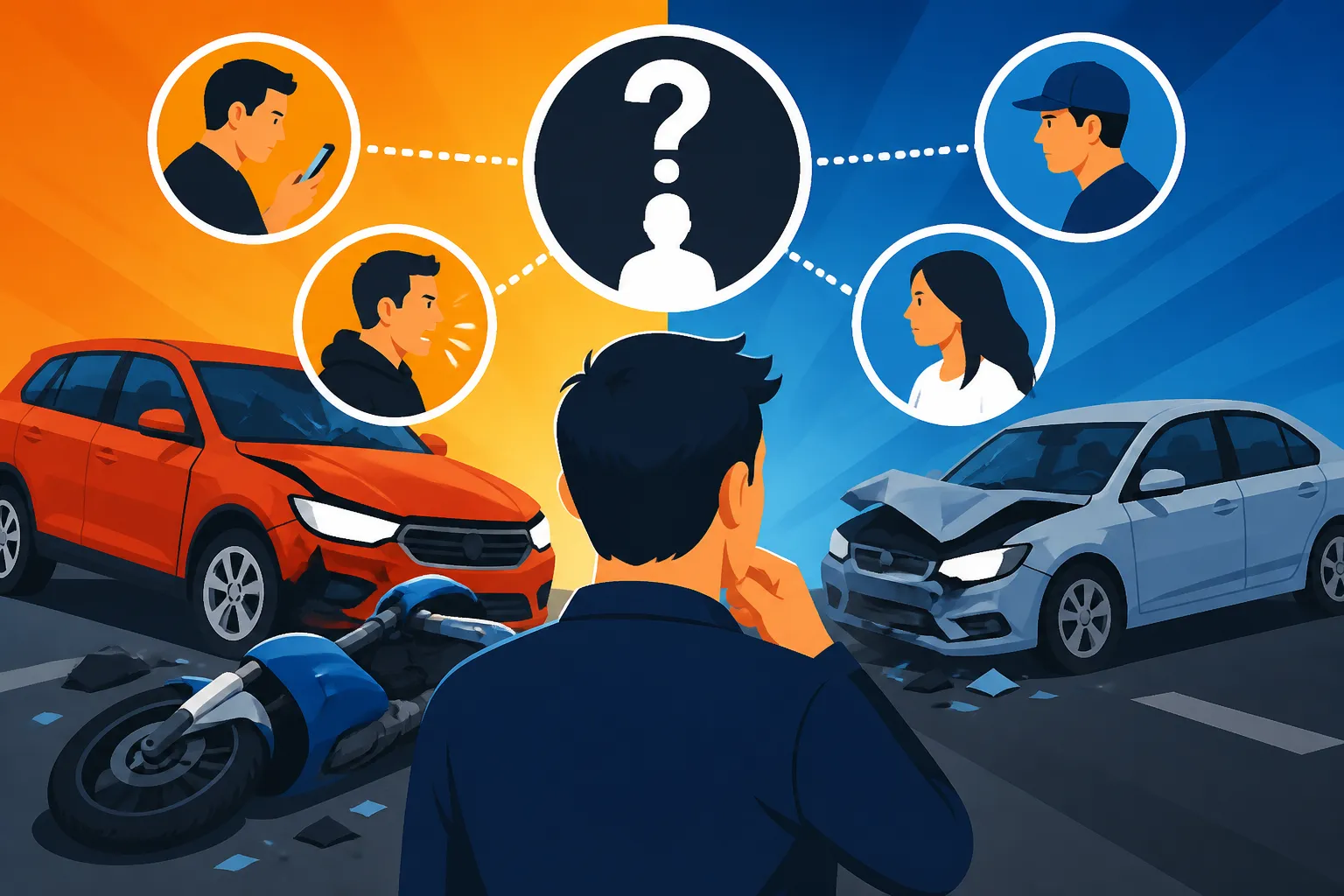
One of the biggest headaches is often the "blame game." Each driver involved, and more importantly, their insurance company, will try to shift responsibility to someone else. They might argue that while their client did hit you, it was only because they were hit first by another vehicle, or that you contributed to your own injuries. This often leads to conflicting accounts, disputes over evidence, and a prolonged investigation process. For you, the injured rider, this translates into delays in getting the compensation you desperately need for medical bills, bike repairs, and lost wages. It's not uncommon for these cases to become protracted legal battles precisely because there are so many variables and so many stakeholders trying to protect their own interests.
Unraveling Fault in Layered Collisions
When multiple vehicles collide, it's rarely a single, isolated event. Instead, it's often a sequence of impacts, where one collision leads to another, creating a ripple effect that can be incredibly difficult to trace back to its origin. Pinpointing fault requires a meticulous examination of every moment leading up to and during the crash.
The Chain Reaction Effect
Picture this: you're on a highway, perhaps outside Atlanta, Georgia, and traffic suddenly jams up. The car behind you isn't paying attention, and they slam into your motorcycle. This initial impact propels you forward, causing your bike to collide with the car directly in front of you. This is a classic chain reaction, and it immediately raises questions: Is the first car that hit you solely responsible? Or did your subsequent impact with the car ahead create additional damages for which you might also bear some responsibility? Or perhaps the car in front of you slammed on their brakes for no good reason, initiating the whole mess?
In these scenarios, investigators and insurance adjusters will try to reconstruct the entire event. They’ll look at vehicle damage, skid marks, impact points, and even crush analysis to determine the force and direction of each hit. The goal is to establish a clear chronological sequence of events. For instance, if the initial rear-end impact was severe enough to push you into the vehicle ahead, then the driver who initiated that first collision is typically found primarily at fault for the entire chain of events. However, if you failed to maintain a safe following distance before the first impact, or if your actions contributed to the severity of the second impact, your own degree of fault might come into play, which can significantly affect your settlement. This is precisely when understanding How Insurance Companies Assign Blame to Riders becomes critical.
Simultaneous vs. Sequential Impacts
The distinction between simultaneous and sequential impacts is subtle but profoundly important in multi-vehicle fault determination. A sequential impact, as described above, is a series of distinct hits that happen one after another. Think of dominoes falling. Fault generally traces back to the first domino pusher. A simultaneous impact, however, occurs when multiple vehicles collide at roughly the exact same moment, or in such quick succession that it's difficult to separate them. This might happen in an intersection accident where several vehicles are maneuvering, or during a sudden, chaotic lane change.
For example, if you're riding through a complex intersection in downtown Chicago, and two cars simultaneously try to turn into your lane from different directions, both making contact with your motorcycle at the same time, this is closer to a simultaneous impact. In such a scenario, fault could be shared between the two drivers who struck you, or even spread among three or more if additional vehicles were involved in the immediate collision. Proving Who Is at Fault in a Multi-Vehicle Motorcycle Crash often hinges on pinpointing these precise moments and understanding the physics of the collision, which frequently requires expert accident reconstruction. This is where detailed evidence, such as eyewitness statements and traffic camera footage, becomes invaluable.
The Role of Each Driver's Actions and Inactions
Every single driver involved in a multi-vehicle accident has their actions (or inactions) scrutinized. It's not just about who hit whom first, but also about what each driver could have done to prevent or mitigate the accident. Did someone fail to yield? Were they speeding? Was someone distracted, perhaps texting on their phone? Or did a driver make an unsafe lane change? These are all factors that contribute to Common Causes of Motorcycle Accidents.
Consider a scenario on a crowded interstate near Dallas, Texas. A driver attempts to make an illegal lane change, weaving through traffic. This forces the car next to them to swerve, and that swerving car then clips your motorcycle, sending you into the path of a third vehicle. Here, the initial illegal lane changer is likely to be assigned a significant portion of the fault, as their reckless action set off the entire chain. However, if the second driver, who swerved into you, was also speeding excessively, or if you yourself were riding in a blind spot without proper awareness, then the fault might be distributed among multiple parties. Each driver's duty of care on the road is evaluated, and any breach of that duty can contribute to their share of liability.
Common Multi-Vehicle Scenarios and Fault Implications
To better understand how fault gets assigned, let's look at some common real-world scenarios that often lead to multi-vehicle motorcycle accidents. Each situation has its own unique dynamics when it comes to liability.
Rear-End Collisions in a Pile-Up
Rear-end collisions are unfortunately very common, and they are frequently the catalyst for larger multi-vehicle pile-ups. When traffic suddenly slows or stops, and a driver isn't paying attention, they hit the vehicle in front of them, creating a domino effect. If you're on your motorcycle and you get caught in the middle or at the end of such a sequence, it's a terrifying experience, and your risk of severe injury skyrockets.
In most rear-end collisions, the trailing driver is presumed to be at fault because they are expected to maintain a safe following distance and be able to stop in time. This legal principle generally holds true even in a multi-vehicle pile-up. If Car A rear-ends your motorcycle, pushing you into Car B, Car A's driver is typically responsible for the damages to both your bike and Car B, as well as your injuries. However, it's not always cut and dry. If Car B stopped suddenly and without warning, or if you stopped abruptly and illegally, that could complicate fault. But generally, the driver who initiated the first rear-end impact often bears the brunt of the blame for the entire pile-up. This is a primary example of Who Is at Fault in a Rear-End Collisions Motorcycle Accident.
Lane Changes Gone Wrong in Heavy Traffic
Lane changes in heavy traffic, particularly on multi-lane highways like the I-5 in California, require extreme caution. When drivers become impatient or fail to check their blind spots, they can trigger disastrous multi-vehicle accidents involving motorcycles. A car veering suddenly into an occupied lane, or cutting off another vehicle, can cause a chain reaction of braking, swerving, and subsequent collisions.
If a driver makes an unsafe lane change and causes a multi-vehicle accident, they will almost certainly be found primarily at fault. They have a legal duty to ensure the lane is clear before moving into it. However, if the driver they cut off then overreacts or makes another unsafe maneuver that contributes to additional collisions, their actions might also be scrutinized. For a motorcycle rider, being aware of your surroundings and anticipating sudden moves from other drivers is crucial, but ultimately, the responsibility for a safe lane change rests with the driver performing the maneuver. The challenge then becomes gathering enough evidence to prove that a driver made an Motorcycle Accidents Caused by Unsafe Lane Changes.
Road Hazards Initiating Multi-Bike Accidents
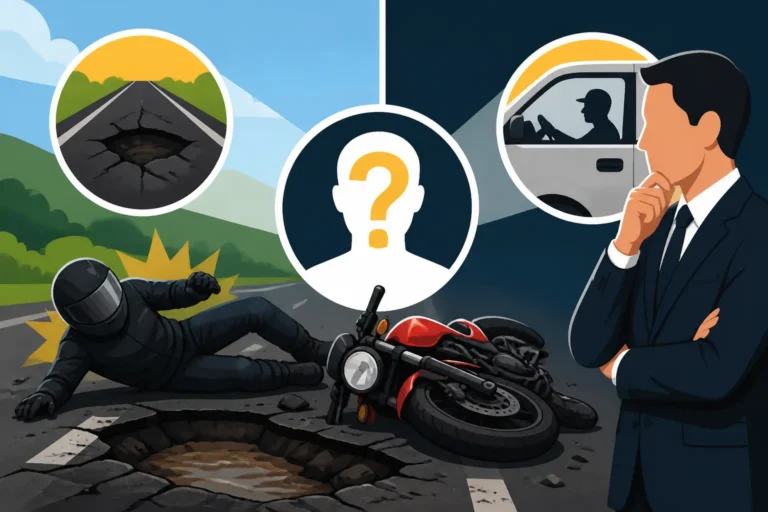
Sometimes, the initial cause of a multi-vehicle crash isn't another driver's negligence, but a dangerous road condition or a foreign object on the roadway. This could be anything from a massive pothole in Pennsylvania to spilled debris, unexpected gravel, or even a fallen tree limb. When a rider or driver encounters such a hazard, they might swerve abruptly, brake suddenly, or lose control, leading to a cascade of collisions with other vehicles.
In these situations, the question of fault can become much broader. While the immediate drivers involved might be assigned some degree of fault for not reacting appropriately, liability might extend to the entity responsible for maintaining the road, such as a state Department of Transportation or a local municipality. If a city failed to address a known hazard, like a massive pothole that has been reported multiple times, they could be held partially liable for the ensuing multi-vehicle crash. This is a complex area, as it involves governmental immunity laws and strict deadlines for filing claims against public entities. Successfully proving Who Is Liable for a Pothole Motorcycle Accident or other road hazards requires substantial evidence that the hazard existed, was known or should have been known, and directly caused the accident.
Gathering Evidence to Pinpoint Responsibility
In any motorcycle accident, evidence is king. In a multi-vehicle scenario, it's not just king, it's the entire royal court. Without solid documentation and facts, navigating the conflicting accounts and self-serving insurance claims will be nearly impossible. This is where your immediate actions after the crash, even while injured and shaken, become incredibly important.
Importance of Police Reports and Accident Reconstruction
The police report is often the foundational document in any accident claim, and it's especially critical in multi-vehicle crashes. It will detail the officers' initial observations, gather witness statements, describe vehicle positions, and often include a preliminary determination of fault. While not always conclusive, it provides an objective account from an official source and can heavily influence how insurance companies view the claim. If you're involved in such a complex crash, ensure the police are called to the scene and that a detailed report is filed. Remember, an accurate police report can make or break your ability to Proving Fault in a Motorcycle Accident.
However, police reports sometimes don't capture the full intricate dance of a multi-vehicle collision. This is where accident reconstruction experts come in. These specialists use physics, engineering, and digital tools to piece together the events of the crash, often recreating the scene, analyzing vehicle damage patterns, and calculating speeds and angles of impact. They can determine the sequence of impacts, the forces involved, and ultimately, help clarify which driver's actions were the primary cause of the chain reaction. Their findings can provide the objective, scientific evidence needed to cut through conflicting witness statements and self-serving narratives, offering a clearer picture of who truly caused the mayhem.
Witness Accounts and Dashcam Footage
In a multi-vehicle crash, having multiple sets of eyes on the road can be a huge advantage. Independent witness statements can corroborate your version of events and contradict those of other drivers or their passengers, who might be incentivized to protect their own interests. It's crucial to gather contact information from anyone who saw the accident unfold, even if their perspective seems minor at the time. Their recollections of which vehicle swerved first, who was speeding, or who seemed distracted can be invaluable. This directly affects How Witnesses Affect Motorcycle Fault.
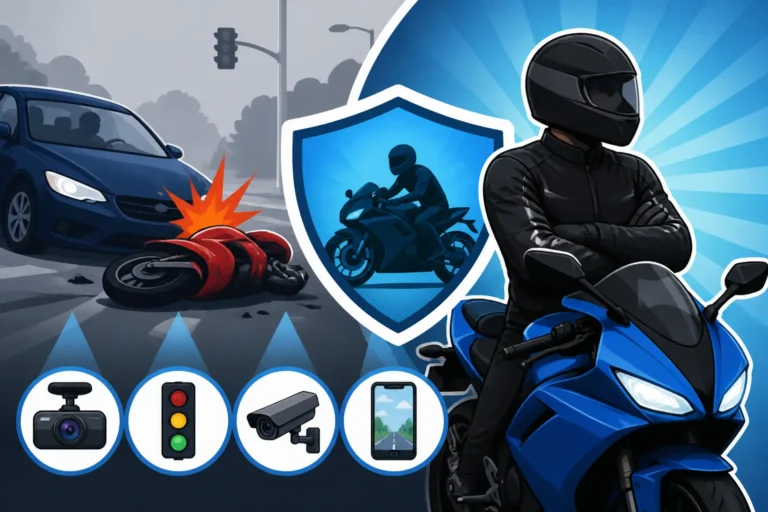
Beyond human witnesses, technology offers powerful evidence. Dashcam footage from any vehicle involved, or even from nearby businesses or traffic cameras, can be the ultimate game-changer. A video recording provides an undeniable, objective account of the entire incident, showing the precise sequence of events, the actions of each driver, and the severity of impacts. If you or any other driver involved has dashcam footage, secure it immediately. It can clearly show How Dashcam Footage Proves Fault and put an end to any disputes about who initiated the chain of collisions. Even if you don't have one on your bike, it's worth considering getting one for future rides, as they are increasingly useful in proving fault.
Damage Analysis and Injury Documentation
Every scratch, dent, and shattered component on each vehicle involved tells a story. Damage analysis, often conducted by experienced adjusters or forensic engineers, helps determine the points of impact, the force of the collisions, and the direction of travel. For your motorcycle, particular attention will be paid to the location and severity of damage, as this can indicate whether you were hit from the front, side, or rear, and whether you were propelled into another object.
Equally important is comprehensive injury documentation. Motorcycle accidents often result in severe injuries due to the lack of protection for the rider. Road rash, broken bones, traumatic brain injuries, and spinal cord damage are tragically common. Every medical record, doctor's note, diagnostic scan, and therapy bill serves as critical evidence not only of the extent of your suffering but also to connect those injuries directly to the accident. Keeping a detailed journal of your pain, limitations, and emotional distress can also bolster your claim for non-economic damages. When considering Types of Damages in a Motorcycle Accident Claim, thorough documentation is paramount. The more thoroughly you document your injuries and their impact on your life, the stronger your case will be against all responsible parties.
Navigating Shared Fault and Comparative Negligence
Even if you weren't the one who initiated the multi-vehicle crash, it's possible that the insurance companies, or even a court, might try to argue that you bear some percentage of fault. This is where the concept of comparative negligence comes into play, and it's a critical factor in how much compensation you might ultimately receive.
How Your Actions Might Affect Your Claim
It’s a tough pill to swallow, but sometimes, even in a chaotic multi-vehicle accident, a motorcycle rider's actions can be deemed to have contributed to the crash or the severity of their injuries. For example, if you were speeding through the pile-up, lane splitting unsafely in a state where it's not legal, or even riding without a proper motorcycle endorsement, these factors could be used by opposing insurance companies to assign you a percentage of blame. They might argue that if you weren't speeding, you could have reacted quicker, or if you had your headlights on, you would have been seen sooner. Even not wearing proper gear, like a DOT-compliant helmet, could potentially be used against you in some states if your head injuries are part of your claim, under what's known as the "helmet defense."
Let's say you're riding in Florida, which has a pure comparative negligence rule, and you're involved in a pile-up. The primary cause was a distracted driver, but you were also found to be riding 10 mph over the speed limit. A jury might determine that the distracted driver was 80% at fault, but your speeding contributed 20% to the accident. If your total damages were $100,000, your compensation would be reduced by 20%, leaving you with $80,000. This is a clear example of When a Rider Is Partially at Fault and how it impacts the final payout.
Understanding State-Specific Comparative Negligence Laws
The exact impact of shared fault varies significantly depending on the state where the accident occurred. There are primarily three types of comparative negligence rules in the U.S.:
- Pure Comparative Negligence: States like California, Florida, and New York follow this rule. Under pure comparative negligence, you can recover damages even if you are mostly at fault, though your recovery will be reduced by your percentage of fault. So, if you are 90% at fault for a multi-vehicle crash, you could still technically recover 10% of your damages from the other parties.
- Modified Comparative Negligence (50% Bar Rule): Many states, including Colorado and Wisconsin, use this. You can only recover damages if your percentage of fault is 50% or less. If you are found 51% or more at fault, you cannot recover any compensation from the other parties.
- Modified Comparative Negligence (51% Bar Rule): This is the most common approach, found in states like Texas and Illinois. You can only recover damages if your percentage of fault is 50% or less. If you are found 51% or more at fault, you are barred from recovery. This distinction between 50% and 51% might seem small, but it's crucial.
The table below summarizes these rules:
| State Type | Description | Example |
|---|---|---|
| Pure Comparative Negligence | Injured party can recover damages regardless of their percentage of fault, but the award is reduced proportionally. Even if 99% at fault, you can recover 1% of damages. | Rider suffers $100,000 in damages, found 70% at fault. Can recover $30,000. |
| Modified Comparative (50% Bar) | Injured party can recover damages if their fault is 50% or less. If fault is 51% or more, they recover nothing. If fault is 50%, they can recover 50%. The award is reduced by their fault percentage. | Rider suffers $100,000 in damages, found 50% at fault. Can recover $50,000. If 51% at fault, recovers $0. |
| Modified Comparative (51% Bar) | Injured party can recover damages if their fault is 50% or less. If fault is 51% or more, they recover nothing. If fault is exactly 50%, they can recover 50%. This rule is identical to the 50% bar when determining if you can recover, but often means if you are equally at fault (50%), you can still recover, whereas with 50% bar, if you are 50% at fault you recover, if 51% you don't. The difference is subtle but states choose one over the other. | Rider suffers $100,000 in damages, found 50% at fault. Can recover $50,000. If 51% at fault, recovers $0. For practical purposes, often operates like the 50% Bar rule. |
It's clear that How Comparative Negligence Reduces Your Payout can have a massive impact on your final compensation, especially in a multi-vehicle crash where blame is often distributed among several parties. Knowing your state's specific laws is essential when pursuing a claim.
Immediate Steps After a Complex Motorcycle Collision
The moments immediately following a multi-vehicle motorcycle accident are chaotic, scary, and overwhelming. However, what you do in these crucial first minutes and hours can significantly impact your ability to prove fault and secure compensation later on. Taking the right steps, even if you’re shaken, is absolutely vital.
Prioritizing Safety and Seeking Medical Attention
Your absolute first priority after any crash, especially a complex multi-vehicle one, must be your safety and health. Check yourself for injuries and, if possible and safe, move yourself and your motorcycle to the side of the road, out of the flow of traffic. Turn on your hazard lights. If you cannot move, stay put and signal for help. Never try to move someone else who is severely injured unless they are in immediate danger. Call 911 immediately. Even if you feel "fine," the adrenaline can mask serious injuries. Many serious motorcycle injuries, like concussions or internal bleeding, have delayed symptoms. This is why you should always seek immediate medical attention, either by ambulance or by going to the nearest emergency room. Getting checked out by medical professionals creates an official record of your injuries directly linked to the accident, which is critical for any future claim.
Even a minor pain might indicate a more serious underlying issue that could worsen without prompt care. Think about the impact of a low-speed fender bender versus a multi-vehicle pile-up. The forces involved in the latter are far greater, increasing your risk of significant trauma. Getting prompt medical care also eliminates any argument from insurance companies that your injuries weren't caused by the accident or that you exacerbated them by delaying treatment. This falls under the general guidelines of What to Do After a Motorcycle Accident.
Documenting the Scene and Exchanging Information
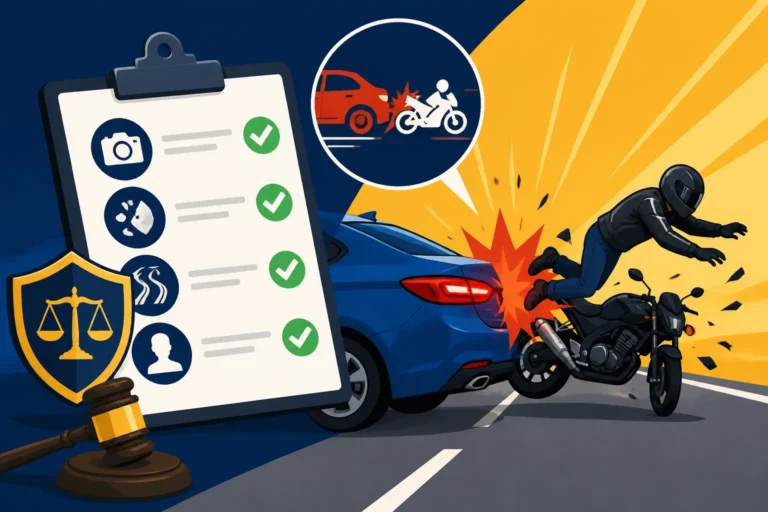
Once safety is addressed and emergency services are en route, it’s time to start gathering information. This might feel impossible given the stress, but it's incredibly important. If you can, take as many photos and videos as possible with your phone. Capture the overall scene, the positions of all vehicles involved, damage to your motorcycle and other cars, skid marks, road debris, traffic signs, and any relevant road conditions. Zoom in on specific points of impact and damage. Photograph the license plates of all vehicles, and get clear pictures of the other drivers' faces and insurance cards.
Exchange contact and insurance information with all other drivers involved. Don't just focus on the car that hit you directly; every vehicle involved in the chain reaction is a potential source of insurance coverage or a potential party against whom blame might be shifted. Get names, phone numbers, email addresses, insurance company names, policy numbers, and license plate numbers. If there are any witnesses, politely ask for their contact information too. Remember, do not admit fault or apologize to anyone, even if you feel shaken. Stick to the facts, exchange information, and let the professionals determine fault. The more detailed documentation you have, the stronger your ability to file a claim and resolve the complex fault issues that arise in multi-vehicle collisions. This is a crucial step in collecting Motorcycle Accident Evidence for Proving Fault.
Disclaimer
Please note that this article provides general information and should not be considered legal advice. Motorcycle accident laws vary significantly by state, and the specifics of your case will depend on many unique factors. If you've been involved in a multi-vehicle motorcycle crash, it's highly recommended to consult with a qualified personal injury attorney in your jurisdiction to understand your rights and options.